In one line: A poster has seconds to catch a passer-by, so it works through few words + bold design — every choice has to earn its space.
Picture a wall of posters as you rush for a train.
One shouts ‘MIND THE GAP’ in huge letters. Another whispers a charity's plea in tiny grey text. You only really see the first.
A poster can't rely on you stopping to read — so it says little, but says it loud. Your job is to ask why each big, deliberate choice is there.
What to look for
A short, punchy line
Usually a slogan or command — few words, easy to read at a glance: ‘Just breathe.’
One big image or symbol
A single picture does the emotional work — a lone tree, a clenched fist, a smiling face.
Size and colour as emphasis
The biggest, brightest thing is what they want you to notice first.
A call to action
What to do next — ‘Donate today’, ‘Learn more’, a date, a QR code.
The key move: Ask ‘what did they make big, and why?’ On a poster, size = importance. The largest word or image is the message; everything else supports it.
Free preview
This is the free notes preview
You're reading the free notes. Aimnova Pro unlocks the full study experience — and you can try it with your first topic free to keep:
- FlashcardsLock in vocabulary and key terms with spaced repetition.
- Practice questionsAnswer exam-style questions and get instant AI marking.
- Mock exams & past-paper vaultSit full mocks and see exactly how examiners award marks.
- Personalised study planA daily plan built around your exam date and weak areas.
Why it matters in the exam: Paper 1 often sets a poster or advert. Because there's little text, a strong answer reads the design — size, colour, image and layout — not just the words.
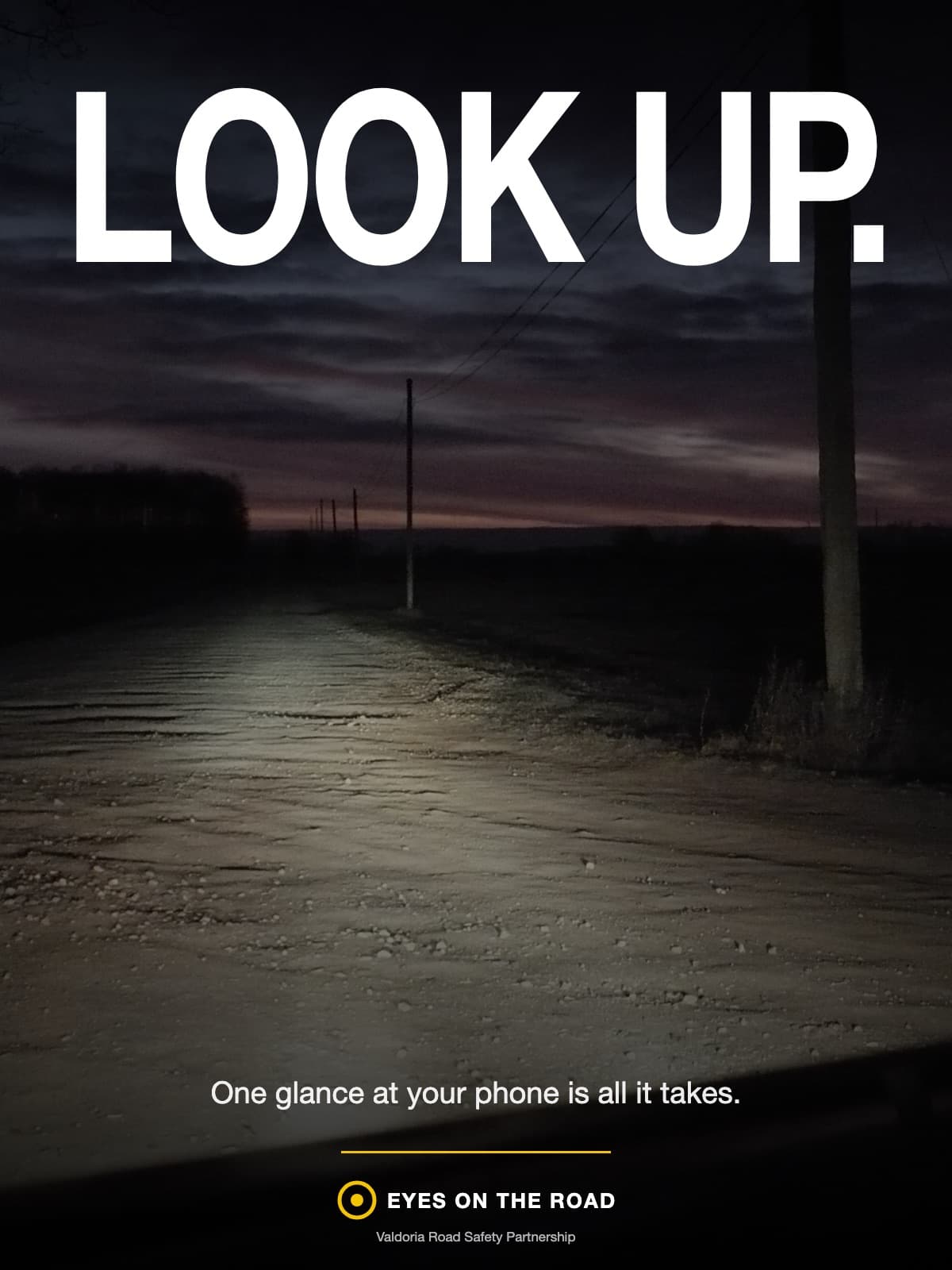
Analyse how this road-safety poster uses design and words to warn its audience.
Model answer plan
See the mark-by-mark plan — for / against / judgement, with marking guidance — in study mode.
Watch out: Don't just list the colours (‘it uses black and white’). Always say what the colour or size does to the viewer — that's what matters most.