The gist: A transcript writes down real speech exactly — with its ‘um’s, pauses and interruptions — so how people talk reveals character and who holds the power.
Read what people actually say, not the tidy version.
“I just — no, sorry, let me — the thing is, um, I never agreed to that.”
All those stumbles and restarts aren't mistakes to fix — they're evidence. Someone hesitant, or cut off, or dominating the talk tells you a lot. A transcript captures the mess of real speech; analyse it.
What to look for
Fillers and hesitations
‘um’, ‘er’, ‘like’, false starts — signs of nerves, thinking or uncertainty.
Interruptions and overlaps
Who cuts in and who gets cut off shows who holds the power.
Turn length
One person dominating, another giving one-word replies, reveals the balance.
Non-verbal notes
‘(pause)’, ‘(laughs)’, ‘(quietly)’ — how something is said, not just what.
The key move: Ask ‘how does the WAY they speak reveal character and power?’ In a transcript, hesitations, interruptions and turn length are the evidence.
Free preview
This is the free notes preview
You're reading the free notes. Aimnova Pro unlocks the full study experience — and you can try it with your first topic free to keep:
- FlashcardsLock in vocabulary and key terms with spaced repetition.
- Practice questionsAnswer exam-style questions and get instant AI marking.
- Mock exams & past-paper vaultSit full mocks and see exactly how examiners award marks.
- Personalised study planA daily plan built around your exam date and weak areas.
Why it matters in the exam: A transcript can appear in Paper 1. A strong answer analyses features of real speech — pauses, fillers, interruptions, who dominates — and what they reveal, not just the topic.
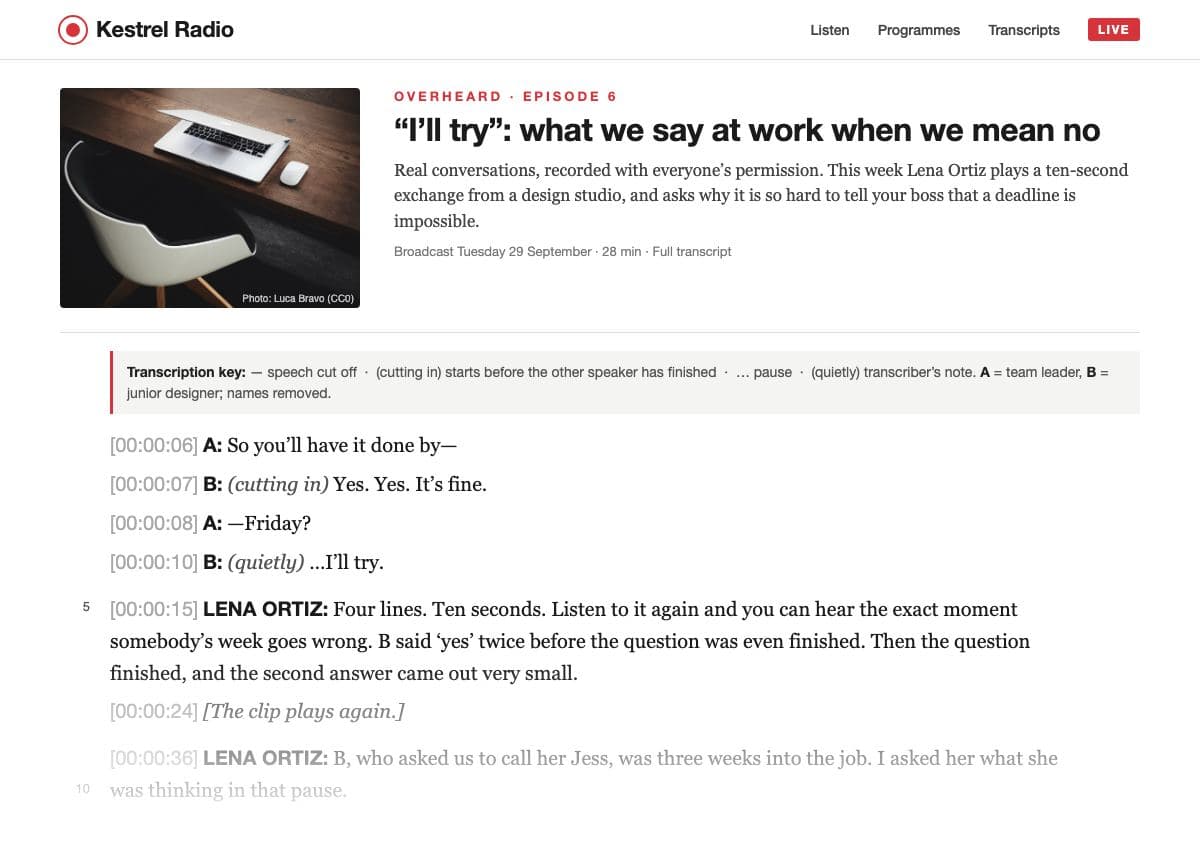
Analyse how the opening of this transcript reveals the power between the two speakers.
Model answer plan
See the mark-by-mark plan — for / against / judgement, with marking guidance — in study mode.
Watch out: Don't ‘tidy up’ the speech in your head and analyse only the topic. The ‘um’s, pauses and interruptions are the evidence.