The short version: A social media post has to work in seconds and a few words — so it leans on tone, an image and hashtags to feel relatable and get shared.
You scroll, and a post stops your thumb.
A photo of a burnt dinner. Caption: “Day 1 of learning to cook. The smoke alarm and I are enemies now. #SendHelp”
It's tiny, but it works — the joke, the image and the hashtag make it feel human and shareable. Analyse how so few words do so much.
What to look for
A short, punchy caption
A line or two — often a joke, a confession or a hot take.
Image + caption together
The picture and words play off each other; neither works alone.
Hashtags and emojis
Tone-setters and tags that signal a community and a mood.
A pull to engage
Built to be liked, shared or replied to — sometimes it asks outright.
The key move: Ask ‘how does it earn a like or a share in seconds?’ A post persuades through relatable tone, image and brevity — every word and emoji is chosen.
Free preview
This is the free notes preview
You're reading the free notes. Aimnova Pro unlocks the full study experience — and you can try it with your first topic free to keep:
- FlashcardsLock in vocabulary and key terms with spaced repetition.
- Practice questionsAnswer exam-style questions and get instant AI marking.
- Mock exams & past-paper vaultSit full mocks and see exactly how examiners award marks.
- Personalised study planA daily plan built around your exam date and weak areas.
Why it matters in the exam: Social posts can appear in Paper 1. A strong answer analyses how tone, brevity, image and hashtags create a voice and pull the reader to engage — not just the words.
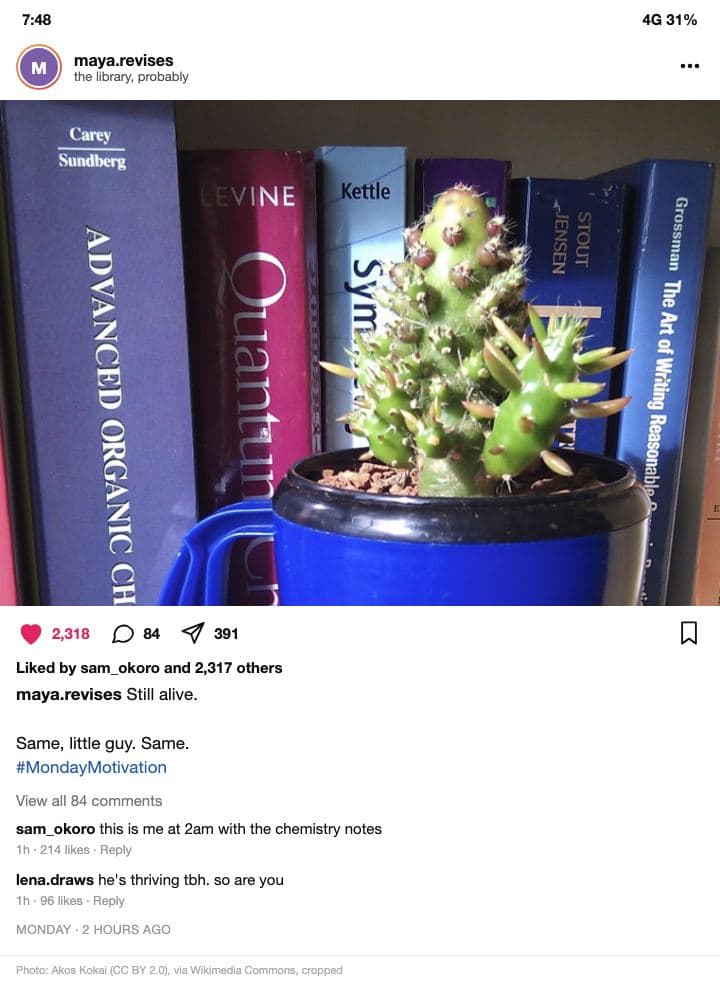
Analyse how this social media post uses image, caption and hashtag to connect with its followers.
Model answer plan
See the mark-by-mark plan — for / against / judgement, with marking guidance — in study mode.
Watch out: Don't dismiss a post as ‘too short to analyse’. The brevity is the craft — every emoji, hashtag and line break is a choice with an effect.