In a nutshell: A blog is an informal, personal piece written online — like a public diary, or a friend talking straight to you.
You know the type of post — chatty, honest, a bit all over the place:
“Okay so I tried the 5 a.m. club. Reader, I am barely a person before 9. But… it kind of worked?”
The slang, the fragments, the jokes aren't sloppy — they're choices that make the writer feel real and likeable.
What to look for
Direct address
‘you’, ‘we’, ‘Reader,’ — a one-to-one feel.
Chatty structure
Short lines, fragments, dashes and ‘…’ that sound like speech.
Humour & honesty
Jokes and laughing at themselves make the writer likeable and trustworthy.
A closing nudge
‘Tell me in the comments’ — a warm invitation that builds community.
‘you’ · fragments · humour · a nudge
The key move: The informal voice is crafted to build trust. Show how it makes the writer feel real and relatable — that's the analysis.
Free preview
This is the free notes preview
You're reading the free notes. Aimnova Pro unlocks the full study experience — and you can try it with your first topic free to keep:
- FlashcardsLock in vocabulary and key terms with spaced repetition.
- Practice questionsAnswer exam-style questions and get instant AI marking.
- Mock exams & past-paper vaultSit full mocks and see exactly how examiners award marks.
- Personalised study planA daily plan built around your exam date and weak areas.
Why it matters in the exam: A Paper 1 blog asks how the writer creates a personal voice or bonds with readers. Show how the informal choices build trust.
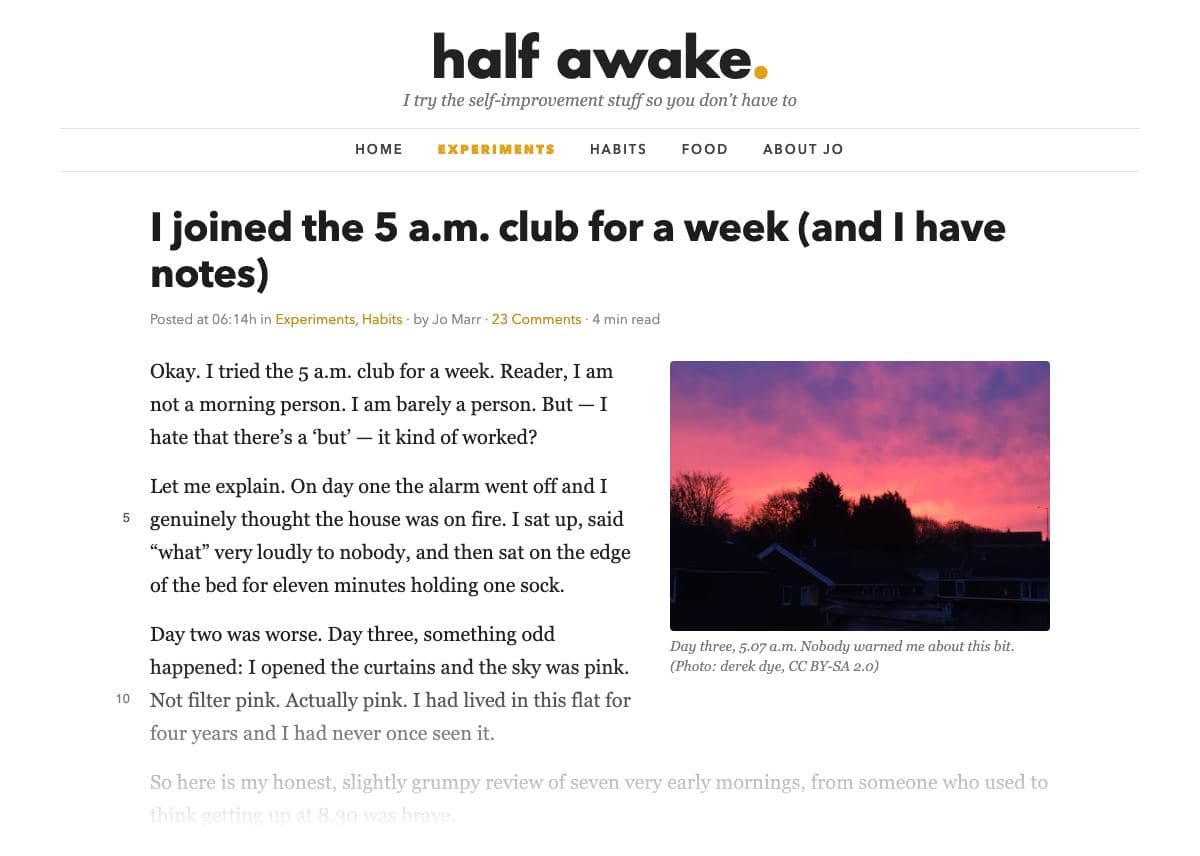
Analyse how the opening of this blog post builds a friendly voice.
Model answer plan
See the mark-by-mark plan — for / against / judgement, with marking guidance — in study mode.
Watch out: Don't call the fragments ‘mistakes’ — they're deliberate. And don't miss the bond: the whole point is feeling spoken to personally.