In one line: A magazine article (a feature) is built to be enjoyed, not just read for facts — so it hooks you, keeps a lively voice, and tells little stories along the way.
Flick open a magazine and you don't get a wall of facts.
You get a punchy headline, a big photo, and an opening line that pulls you in — “I never meant to move to the mountains. Then the Wi-Fi died.”
A feature sells an experience. It informs, but its first job is to keep you reading— so watch how it works to entertain.
What to look for
A hook opening
The first line grabs you — a surprising claim, a scene, a question you want answered.
A distinctive voice
Warm, funny or opinionated — it sounds like a person, not a report.
Anecdotes and detail
Little stories and vivid details make ideas concrete and human.
Headline + standfirst
A catchy title, then a one-line teaser that sums up the appeal.
The key move: Ask ‘how does it keep me reading?’ A feature earns its marks through voice and craft — the hook, the tone, the well-chosen detail — not through raw facts.
Free preview
This is the free notes preview
You're reading the free notes. Aimnova Pro unlocks the full study experience — and you can try it with your first topic free to keep:
- FlashcardsLock in vocabulary and key terms with spaced repetition.
- Practice questionsAnswer exam-style questions and get instant AI marking.
- Mock exams & past-paper vaultSit full mocks and see exactly how examiners award marks.
- Personalised study planA daily plan built around your exam date and weak areas.
Why it matters in the exam: A feature can appear in Paper 1. A strong answer analyses how the voice and structure entertain and persuade — the hook, the anecdotes, the tone — not just what the article is about.
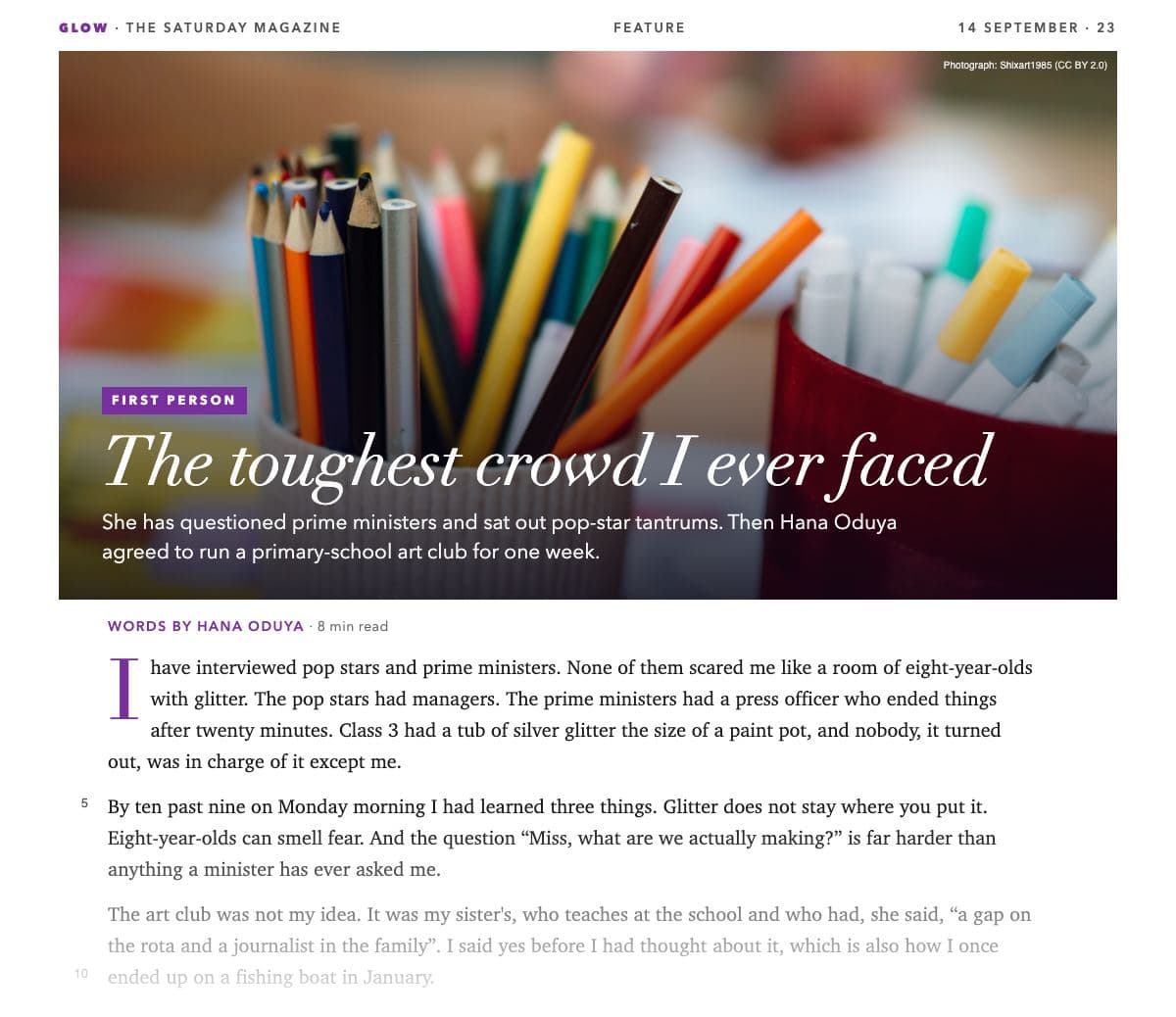
Analyse how this opening of a magazine feature hooks and entertains its reader.
Model answer plan
See the mark-by-mark plan — for / against / judgement, with marking guidance — in study mode.
Watch out: Don't just retell the article's content. The marks come from how it keeps you reading — voice, humour, the shape of a sentence — not what it says.