Key idea: Chemical messengers such as oxytocin may help partners bond and stay together.
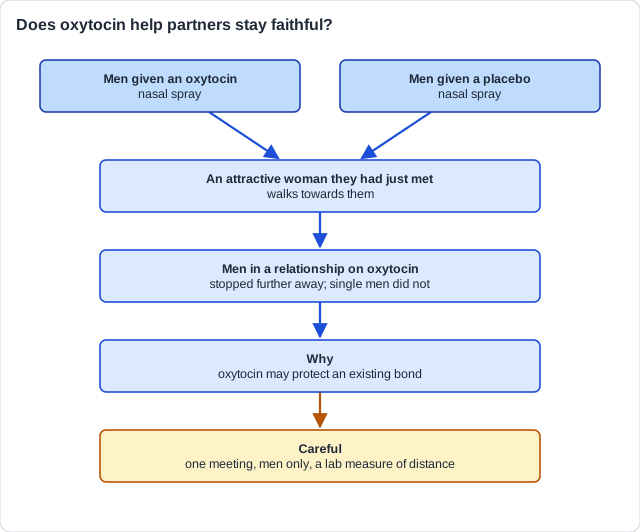
Scheele and colleagues (2012) gave men a nasal spray of oxytocin or a placebo. Men in a relationship who received oxytocin kept a greater distance from an attractive woman they had just met; single men did not. Oxytocin may support staying faithful.
Chemical messengers in relationships
1
Dopamine
Reward and wanting: the rush of new love.
2
Oxytocin
Trust and bonding, released during touch and closeness.
3
Cortisol
The stress hormone, raised by conflict between partners.
Reward · Bond · Stress
Free preview
This is the free notes preview
You're reading the free notes. Aimnova Pro unlocks the full study experience — and you can try it with your first topic free to keep:
- FlashcardsLock in vocabulary and key terms with spaced repetition.
- Practice questionsAnswer exam-style questions and get instant AI marking.
- Mock exams & past-paper vaultSit full mocks and see exactly how examiners award marks.
- Personalised study planA daily plan built around your exam date and weak areas.
Start Studying Free Full access to Aimnova Pro · cancel anytime
Key idea: A placebo-controlled experiment shows an effect of oxytocin; how far it explains real relationships is less clear.
Strengths
- Placebo-controlled, double-blind
- Brain scans of new love (Aron)
- Explains spark and bond
Limitations
- One meeting, men only
- Spray may differ from natural oxytocin
- Leaves out thought and culture
Distance in one meeting is a long way from faithfulness over years.
What HL adds: The culture extension: where families help choose partners, bonding may build slowly after marriage, so explanations built on attraction at first sight may not apply.