Environmental Movements
Environmental movements develop when people become aware that human activities are damaging the environment and believe action is needed to protect ecosystems and future generations.
Big idea: Environmental movements grow through a clear pattern: a problem is identified, awareness spreads, and action or policy change follows.
In IB exams, you are assessed on understanding. You can use any relevant example as long as you clearly explain cause → awareness → action.
What is the environmental movement?
The environmental movement includes people and organisations working to protect nature, reduce pollution, and use resources sustainably.
It became stronger from the late 20th century onwards as environmental problems became more visible.
What influenced the environmental movement?
📚 Literature
Books and reports helped people understand hidden environmental damage and increased public concern.
Why literature mattered
- Exposed environmental problems people could not easily see
- Changed public attitudes and awareness
- Created pressure on governments to introduce environmental laws
Literature → awareness → policy change
👤 Individuals
Some individuals influenced environmental movements by raising awareness and encouraging action.
Why individuals mattered
- Drew attention to specific environmental issues
- Mobilised public support, protests, and campaigns
- Increased political and social pressure on decision-makers
Individuals → awareness → action
🔬 Scientific discoveries
Science provided evidence of environmental damage.
Example: When scientists showed that CFCs were destroying the ozone layer, public concern grew and countries agreed to phase them out through the Montreal Protocol.
- Proved climate change is real
- Linked pollution to health and ecosystem damage
- Supported environmental laws and policies
Science → evidence → laws and policies
💥 Environmental disasters
Disasters showed the real consequences of environmental damage.
Example: The Chernobyl nuclear disaster made the risks of nuclear power visible, increasing public pressure for stricter safety rules and regulation.
- Changed public attitudes quickly
- Increased demand for regulation and safety rules
Disasters → public shock → regulation
⚡ Technological developments
Technology offered solutions to environmental problems.
Example: Cheaper solar and wind power made clean energy realistic, increasing support for policies that reduce fossil-fuel use.
- Renewable energy reduced emissions
- Cleaner technology reduced pollution
Technology → solutions → reduced impact
🌍 International agreements
Many environmental problems affect more than one country, so cooperation is needed.
Example: The Paris Agreement encouraged countries to set emissions targets, increasing coordinated global action on climate change.
- Encouraged countries to work together
- Shared responsibility for global issues
Global problems → cooperation → shared action
📺 Media
Media spreads environmental information widely.
- Increased awareness
- Influenced public opinion
- Encouraged behaviour change
Media → information → behaviour change
What to remember for the exam
Exam Tips:
- Environmental movements are influenced by literature, individuals, science, disasters, technology, international agreements, and media.
- In exam answers, always explain cause → awareness → action, not just name an example.
Key terms
- Environmental movement
- A broad collection of people and organisations advocating to protect the environment, reduce pollution, and use resources sustainably.
- CFCs
- Chlorofluorocarbons: man-made chemicals once used in aerosols, refrigerators, and air conditioners that damage the ozone layer.
- Ozone layer
- A layer of ozone gas in the upper atmosphere that absorbs harmful ultraviolet (UV) radiation from the Sun.
- Montreal Protocol
- A 1987 international treaty that phased out ozone-depleting substances, including CFCs.
- Paris Agreement
- A 2015 international accord where countries committed to limiting global warming to well below 2°C.
- Renewable energy
- Energy from sources that replenish naturally, such as solar, wind, hydro, and geothermal power.
Free preview
This is the free notes preview
You're reading the free notes. Aimnova Pro unlocks the full study experience — and you can try it free for 7 days:
- FlashcardsLock in vocabulary and key terms with spaced repetition.
- Practice questionsAnswer exam-style questions and get instant AI marking.
- Mock exams & past-paper vaultSit full mocks and see exactly how examiners award marks.
- Personalised study planA daily plan built around your exam date and weak areas.
Environmental Movements – Literature example
Let's look at some examples that show how environmental movements developed and what helped them grow.
📚 Literature: Silent Spring (1962) & DDT
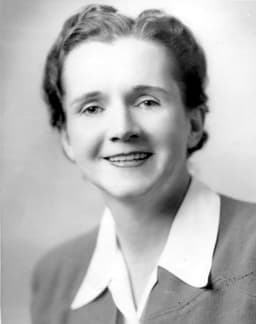
Rachel Carson
1907–1964
A scientist and writer who exposed the harmful effects of pesticides like DDT in her book Silent Spring, helping to start the modern environmental movement.
Why DDT was used
- Pesticide used to kill mosquitoes
- Reduced diseases such as malaria
What Rachel Carson showed in Silent Spring
- DDT does not break down easily
- Enters soil and water
- Builds up in food chains (biomagnification)
Impact on wildlife
- Birds received the highest DDT concentration
- Thin eggshells → eggs broke
- Bird populations declined
Result
- Public awareness increased
- Pressure on governments
- DDT banned in many countries
Literature → awareness → policy change
Exam sentence: Silent Spring exposed the harmful effects of DDT, increasing public awareness and leading to bans.
Learn what examiners really want
See exactly what to write to score full marks. Our AI shows you model answers and the key phrases examiners look for.
Environmental Movement – Individual Example
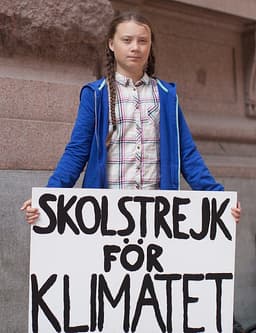
Greta Thunberg
Born 2003
A climate activist who became known for school strikes and speaking to world leaders, increasing pressure on governments to act on climate change.
Issue
- Climate change
- Government inaction on emissions
Actions
- School strikes
- Public protests
- International speeches
Impact
- Global awareness increased
- Youth movements inspired
- Political pressure increased
Individual → awareness → action
Exam sentence: Greta Thunberg raised awareness of climate change and increased political pressure through protest.
Environmental Movement – Individual Example
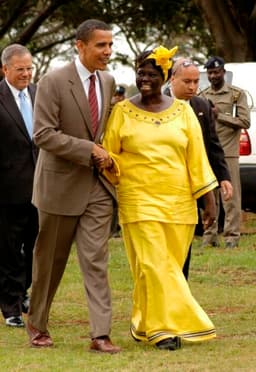
Wangari Maathai
1940–2011
A Kenyan scientist and activist who founded the Green Belt Movement, using tree planting to protect ecosystems and support local communities.
What she did
- Founded the Green Belt Movement
- Promoted tree planting
Why it mattered
- Reduced deforestation and soil erosion
- Protected water supplies
- Empowered local communities
Individual → awareness → local action
Exam sentence: Wangari Maathai protected ecosystems through tree planting and community action.
What to remember for the exam
Exam Tips:
- Environmental movements are influenced by literature and individuals
- Any valid example can be used
- Always explain cause → awareness → action