The big idea: When transpiration is too low to pull water up, roots can push it: root pressure, made by pumping mineral ions into the xylem.
The points to remember
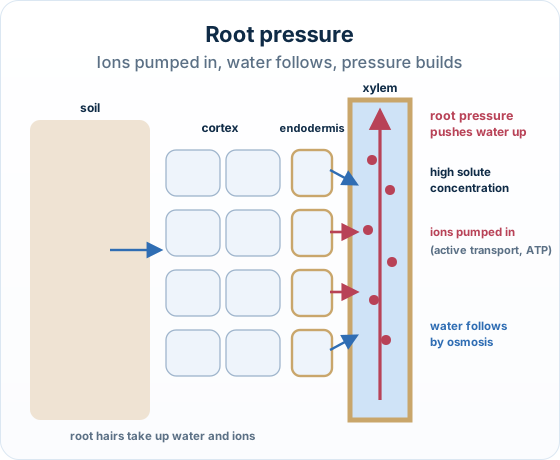
- Endodermis cells pump mineral ions into the xylem by active transport, using ATP.
- The xylem sap becomes hypertonic: its water potential is lower than the cells around it.
- Water follows by osmosis, building a positive pressure in the xylem.
- Root pressure matters when transpiration is low: high humidity, or spring before leaves open.
Transpiration pull
- Starts in the leaves
- Negative pressure (tension)
- Passive: driven by evaporation
- Main force on dry, sunny days
Root pressure
- Starts in the roots
- Positive pressure
- Needs ATP to pump ions
- Matters when transpiration is low
Remember it as: Pump ions in, water follows, pressure pushes.
Real example: guttation. On humid mornings, strawberry and grass leaves often have droplets at their tips: root pressure has pushed water right out of the leaves.
Trap: Root pressure is not capillary action and not transpiration. Name active transport of ions and osmosis.
Free preview
This is the free notes preview
You're reading the free notes. Aimnova Pro unlocks the full study experience — and you can try it with your first topic free to keep:
- FlashcardsLock in vocabulary and key terms with spaced repetition.
- Practice questionsAnswer exam-style questions and get instant AI marking.
- Mock exams & past-paper vaultSit full mocks and see exactly how examiners award marks.
- Personalised study planA daily plan built around your exam date and weak areas.
Start Studying Free Full access to Aimnova Pro · cancel anytime
How it is asked: Expect 'explain how root pressure is generated', often set when transpiration cannot work (humid air, seedlings, spring).
IB-style questionExplain[3 marks]
Explain how water is transported from the soil to the leaves when high humidity prevents transpiration.
Model answer plan
See the answer broken into clear points, with guidance on how each point earns marks.