The big idea: Earth did not make its own water. asteroids brought it, early in Earth's history.
The points to remember
- The young Earth, 4.6 billion years ago, was hot, molten rock with little or no water of its own.
- Asteroids carrying ice and water-bearing rock crashed into the young Earth and delivered its water.
- This is the accepted hypothesis for where Earth's water came from: asteroids, not comets or anything else.
Remember it as: Water came by asteroid: delivered, not home-made.
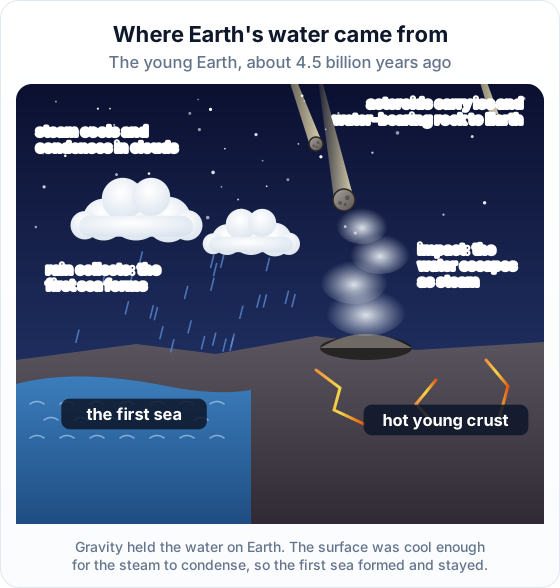
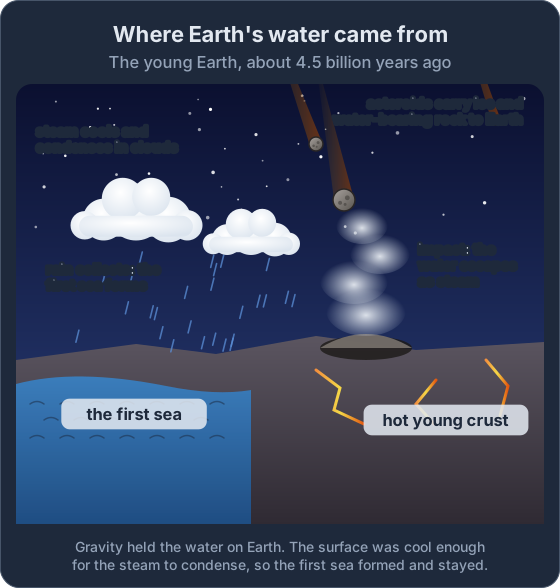
Real example: in September 2019 a small meteorite fell near Flensburg in Germany. It is a piece of an asteroid that holds water locked inside its minerals, the kind of rock that rained down on the young Earth. Billions of such collisions, 4.5 to 3.8 billion years ago, are the hypothesis for where our oceans came from.
Free preview
This is the free notes preview
You're reading the free notes. Aimnova Pro unlocks the full study experience — and you can try it with your first topic free to keep:
- FlashcardsLock in vocabulary and key terms with spaced repetition.
- Practice questionsAnswer exam-style questions and get instant AI marking.
- Mock exams & past-paper vaultSit full mocks and see exactly how examiners award marks.
- Personalised study planA daily plan built around your exam date and weak areas.
The big idea: Getting water is not enough: a planet has to keep it. Earth kept its water for two reasons, gravity and temperature.
The points to remember
- Earth's gravity is strong enough to hold the water and the air; neither can escape into space.
- Earth's temperatures are low enough for water vapour to condense into liquid: oceans formed and stayed.
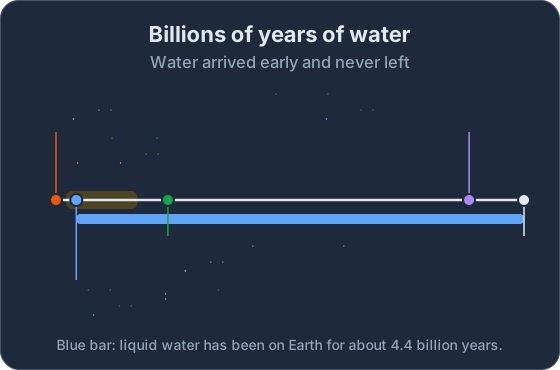
- Liquid water has been on Earth for about 4.4 billion years: that abundance of water gave life time to evolve.
Remember it as: Kept by gravity, made liquid by the cold: hold it and condense it.
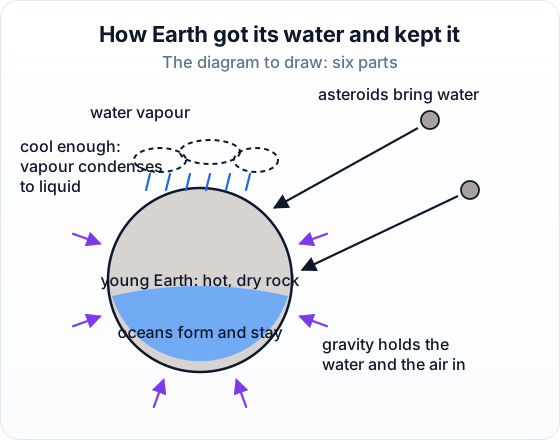
Think of Mars. Mars also received water, and dry river beds show it once flowed. But Mars has only 38 % of Earth's gravity, so its water vapour and most of its air leaked away into space. Earth's stronger gravity held both.
Earth's surface also cooled enough for the steam to condense into liquid. The oldest known crystals, from the Jack Hills in Western Australia, formed in contact with liquid water 4.4 billion years ago, so oceans existed almost from the start.
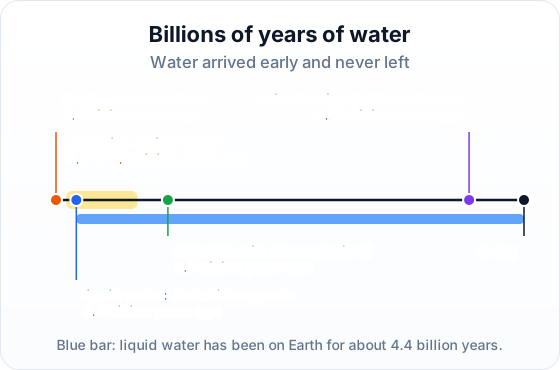
The two reasons, and only these two: Earth kept its water because of gravity and temperatures low enough to condense water. Not because gases absorbed the vapour, not because of high air pressure, and not because rocks soaked the water into their pores: these are the wrong answers that the exam offers.
Get feedback like a real examiner
Submit your answers and get instant feedback — what you did well, what's missing, and exactly what to write to score full marks.
How this is tested: A one-mark multiple-choice item sets a scene (Mars, Venus, the young Earth) and asks what let Earth keep its water. A short written part can ask you to explain both where the water came from and why it stayed.
Dry river valleys show that liquid water once flowed on Mars. Today Mars has 38 % of Earth's gravity, a mean surface temperature of about -65 °C and almost no liquid water, while Earth still has its oceans. Explain why Earth has retained its water while Mars has lost most of its water.
Model answer plan
See the mark-by-mark plan — for / against / judgement, with marking guidance — in study mode.