Cohesion at Higher Level: The same statement as SL. At HL the written questions lean on the xylem: how water can be pulled up under tension without the column breaking. Keep the chain of reasons ready: polar, hydrogen bonds, cohesion, continuous column, tension from the leaves, and the column holds.
Practise this as you read
- Explain the xylem column in that order every time.
- Separate cohesion (water to water) from adhesion (water to the wall) in every answer.
- Quote a real habitat on the water surface: sea skaters on the open ocean.
Free preview
This is the free notes preview
You're reading the free notes. Aimnova Pro unlocks the full study experience — and you can try it with your first topic free to keep:
- FlashcardsLock in vocabulary and key terms with spaced repetition.
- Practice questionsAnswer exam-style questions and get instant AI marking.
- Mock exams & past-paper vaultSit full mocks and see exactly how examiners award marks.
- Personalised study planA daily plan built around your exam date and weak areas.
The big idea: Water molecules are polar, so they attract one another with hydrogen bonds. Water sticking to itself is cohesion.
The points to remember
- Water molecules are polar: a δ− oxygen and two δ+ hydrogens.
- So they are attracted to each other by hydrogen bonds.
- Water sticking to water is cohesion. (Water sticking to other materials is adhesion.)
- One hydrogen bond is weak, but there are very many, so the molecules hold together strongly.
Remember it as: Cohesion: water holds on to water, by hydrogen bonds.
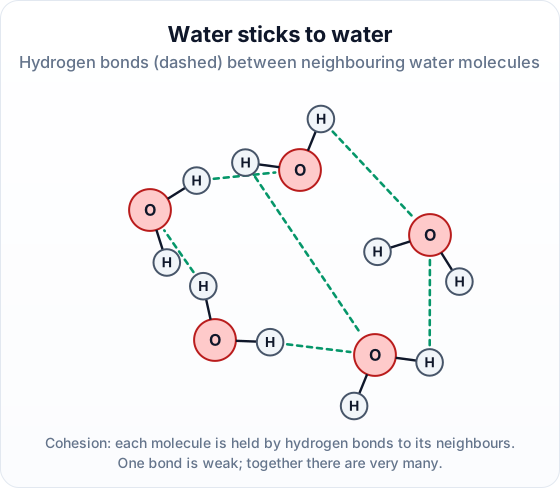
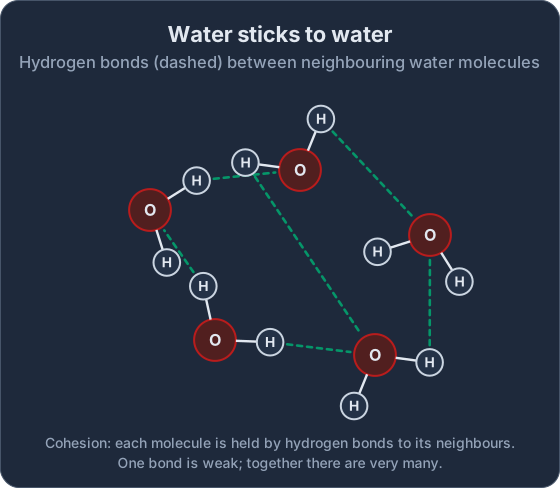
Cohesion: water to water
- Molecules hold on to each other
- Keeps the xylem column unbroken
- Makes the surface tension that holds a pond skater
Adhesion: water to something else
- Molecules stick to another material
- Water clings to the xylem walls
- Water climbs narrow spaces (a different property)
Real example: a dripping tap does not release a thin thread of water but a drop at a time: cohesion holds each drop together until its weight is too much for the hydrogen bonds.
The trap: the wrong name: Cohesion is water to water. Water sticking to an insect's legs, or to a wall, would be adhesion, and 'adhesion of water molecules to each other' is a contradiction.
Surface tension is an effect of cohesion, not a separate cause.
Practice with exam-style questions
Answer exam-style questions and get AI feedback that shows you exactly what examiners want to see in a full-marks response.
The big idea: A tree does not push water up; it pulls it. Water lost from the leaves puts the column in the xylem under tension, and cohesion keeps that column in one piece all the way from the roots.
The points to remember
- Water evaporates from the leaves, and that loss pulls on the water below: the column is under tension.
- Cohesion holds the water in each xylem vessel together as one continuous column.
- So the pull at the top moves the whole column up, from the roots to the leaves, and the column does not break.
- This is how water reaches the top of the tallest trees, more than 100 m above the ground.
Remember it as: Pulled from the top, held together by cohesion: the column climbs in one piece.
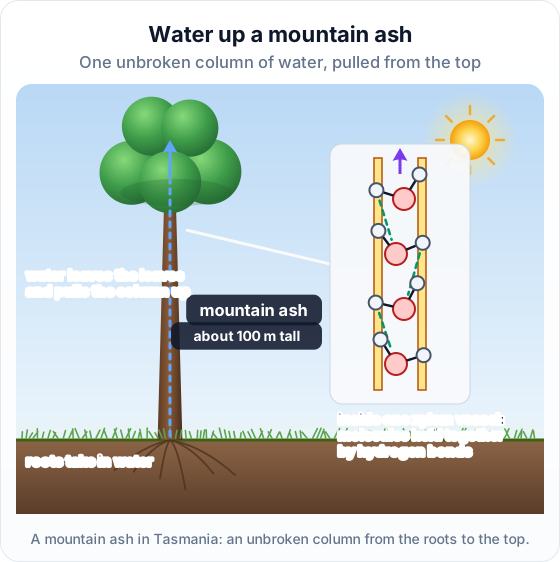
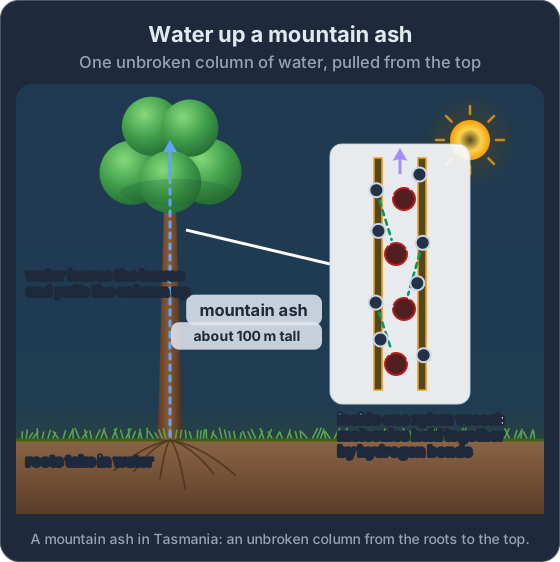
Real example: mountain ash (Eucalyptus regnans) in Tasmania reach about 100 m, the tallest flowering plants. The water in their xylem is under so much tension that the column would snap if cohesion were weaker.
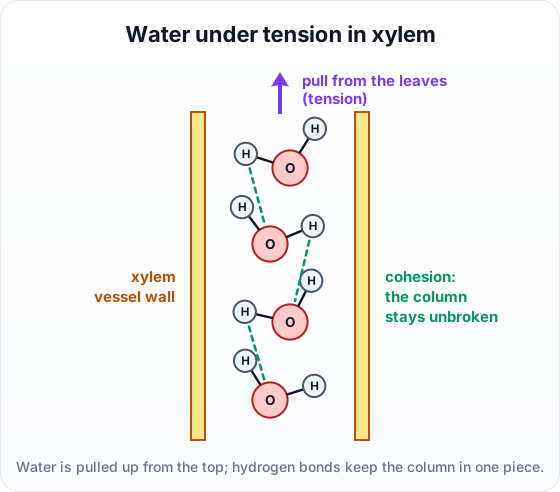
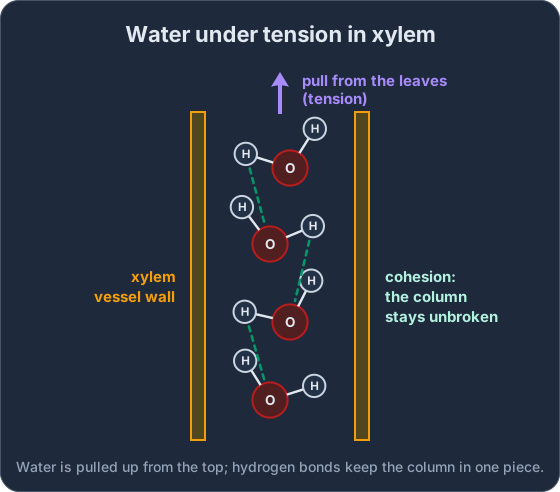
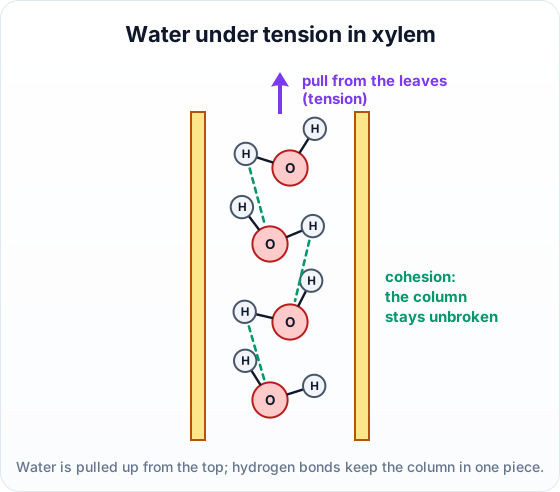
Why the column does not break: Pulling a column of water is like pulling a chain: it only works if every link holds. Hydrogen bonds are the links, and because every molecule holds several neighbours, the chain holds even under strong tension.
The big idea: At the surface, cohesion has a visible effect: the water behaves like a stretched skin. That surface tension makes the surface itself a place where animals can live.
The points to remember
- A molecule at the surface has no water above it, so its neighbours pull it sideways and down.
- The surface behaves like a stretched skin: this is surface tension, and it is caused by cohesion.
- The skin is strong enough to hold up small animals, so the water surface is a habitat.
- Pond skaters and water striders stand and hunt on the surface without sinking.
Remember it as: No water above, so the surface molecules pull inwards: a skin.
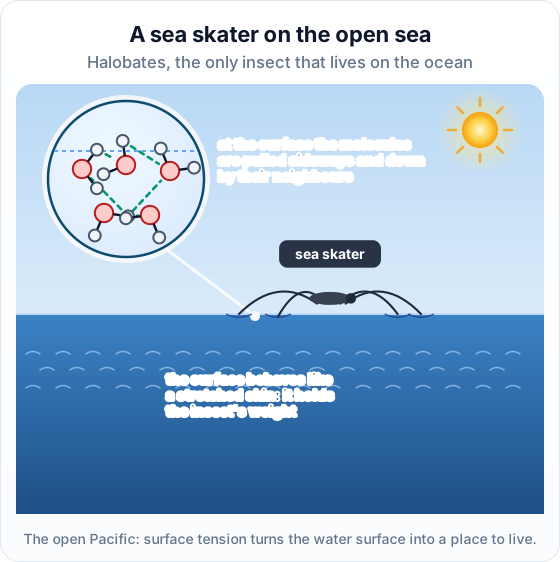
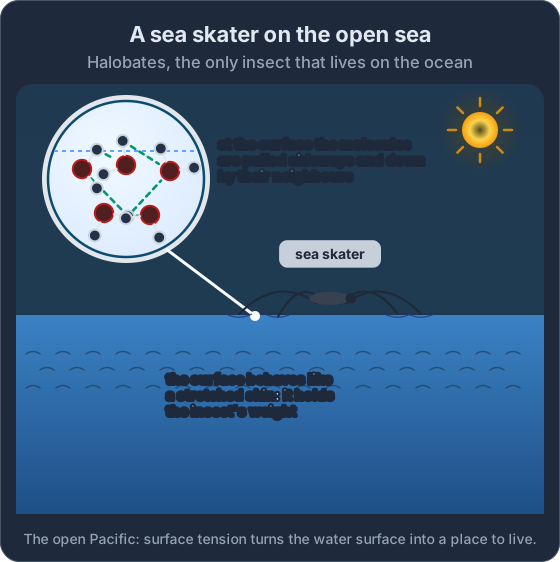
Real example: sea skaters (Halobates) are the only insects that live on the open ocean. They spend their whole lives on the surface of the Pacific, Atlantic and Indian Oceans, held up by surface tension.
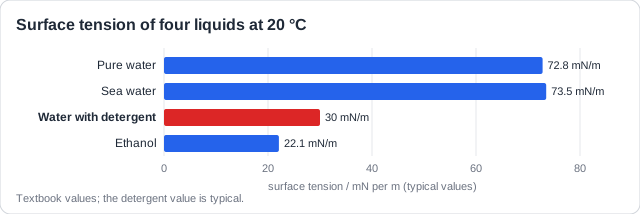
Real example: when the skin fails: Detergent lowers the surface tension of water from about 73 to about 30 mN per m. Where detergent pollutes a pond, pond skaters break through the surface and drown: the habitat disappears.
Feeling unprepared for exams?
Get a clear study plan, practice with real questions, and know exactly where you stand before exam day. No more guessing.
How this is tested: A multiple-choice question asks what lets water move under tension in the xylem: cohesion of water molecules due to hydrogen bonding.
A written part asks you to outline how the cohesive properties of water benefit living organisms, for four marks, or to explain how water's properties let it move through xylem for two.
Mountain ash trees in Tasmania grow to 100 m, and sea skaters live their whole lives on the ocean surface. Outline how the cohesive properties of water benefit living organisms.
Model answer plan
See the mark-by-mark plan — for / against / judgement, with marking guidance — in study mode.
The trap: a property with no benefit: In an Outline question each mark needs a property linked to what it does for an organism. 'Water is cohesive' alone scores no mark; 'cohesion keeps the xylem column unbroken so water reaches the leaves' earns the mark.