Adhesion at Higher Level: The same statement as SL. At HL the questions reach further into the plant: how water crosses the cell walls of a root, and why 'polar walls allow adhesion' counts as an adaptation of xylem. Keep adhesion, cohesion and the pull of transpiration as three separate ideas.
Practise this as you read
- Name the material water adheres to, and say that it is polar.
- Give both forces for any capillary-action answer: adhesion up the wall, cohesion behind it.
- Never write 'capillary action' as the reason water reaches the top of a tree.
Free preview
This is the free notes preview
You're reading the free notes. Aimnova Pro unlocks the full study experience — and you can try it with your first topic free to keep:
- FlashcardsLock in vocabulary and key terms with spaced repetition.
- Practice questionsAnswer exam-style questions and get instant AI marking.
- Mock exams & past-paper vaultSit full mocks and see exactly how examiners award marks.
- Personalised study planA daily plan built around your exam date and weak areas.
The big idea: Water is polar, so it sticks to other polar or charged materials as well as to itself. Sticking to something else is adhesion.
The points to remember
- Adhesion is water sticking to a different material. Cohesion is water sticking to water.
- Water adheres to materials that are polar or charged: its δ+ hydrogens and δ− oxygen are attracted to their charges.
- The pull is a hydrogen bond, the same kind of bond that holds water to water.
- Polar surfaces: glass, cellulose cell walls, soil particles. Water does not stick to wax or oil: no charges.
Remember it as: Co-hesion: water with water. Ad-hesion: water added on to something else.
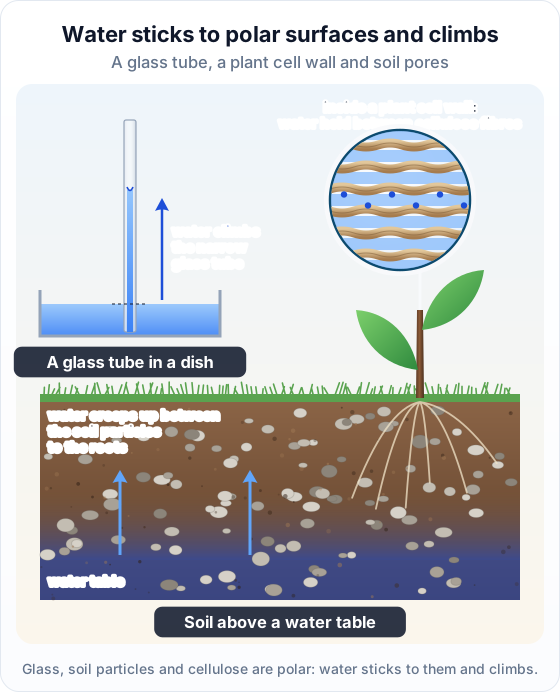
Real example: a wet beach. When the tide goes out the sand stays wet for hours, because a film of water clings to every grain. Sand is silica, a polar surface, so water adheres to it instead of draining straight away. Oil on the same beach makes the sand water-repellent: no charges, no adhesion.
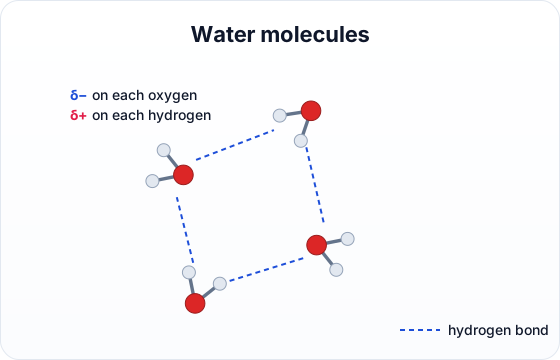
A trap in the wording: 'Adhesion between water molecules' is wrong: water to water is always cohesion, and surface tension comes from cohesion, not adhesion. Adhesion always needs a second material.
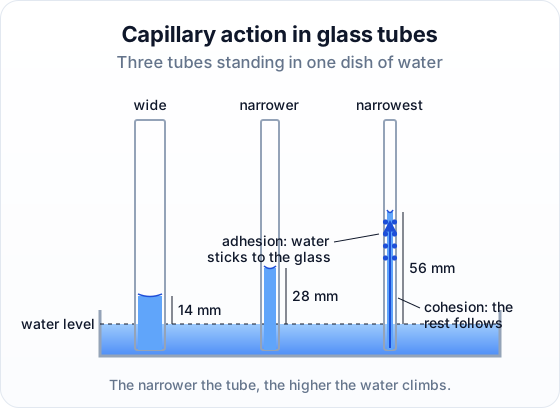
That trap is set with a picture. Look at what this figure can and cannot show:
Feeling unprepared for exams?
Get a clear study plan, practice with real questions, and know exactly where you stand before exam day. No more guessing.
Touch the corner of a sugar cube to a cup of tea and the tea climbs up through the cube in seconds. The cube is full of tiny gaps between polar sugar crystals.
That climb is capillary action: adhesion pulls water up the walls of a narrow gap, and cohesion brings the rest.
The points to remember
- In a narrow space, adhesion pulls water up the walls.
- Cohesion makes the rest of the water follow, so a whole column rises: this is capillary action.
- The narrower the space, the higher the water climbs.
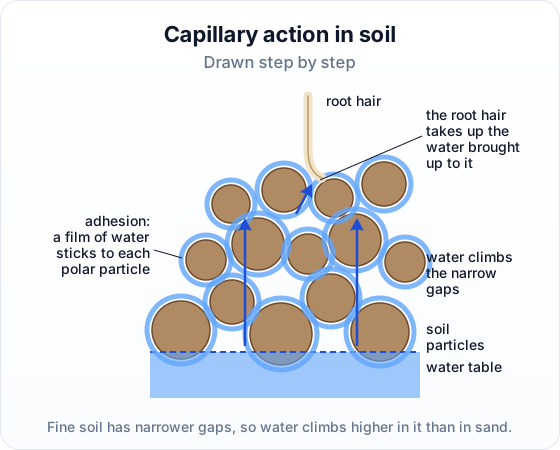
- In soil: water climbs the narrow gaps between soil particles, from wet soil deeper down to the roots.
- In plant cell walls: water creeps through the gaps between cellulose fibres, and clings to the polar walls of the xylem.
Remember it as: Narrow gap, big climb.
In soil the narrow spaces are the gaps between particles. Draw what happens, step by step:
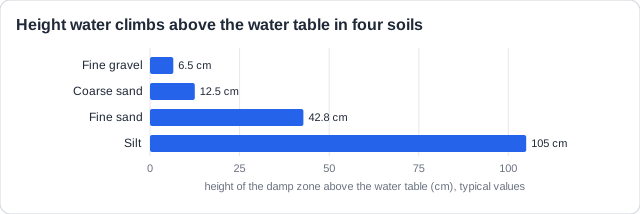
How far water climbs depends on the soil. Measured heights of the damp zone:
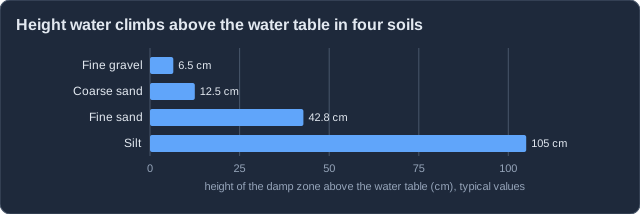
Real example: the cell walls of a root: Inside a root, water does not only pass through cells. Much of it creeps through the cellulose cell walls themselves, between the fibres, by adhesion, until it reaches the xylem. Once in the xylem, the water clings to the polar walls of the vessels, which helps the column hold together as it is pulled up.
One limit to keep in mind, because it costs marks when it is forgotten:
Not the tree, not root pressure: Capillary action lifts water a few centimetres, or a metre or so in fine soil. It is not what lifts water to the top of a tall tree, and it is not root pressure.
Water goes up a tree because evaporation from the leaves pulls on the column; adhesion to the xylem walls helps the column hold on. If asked about root pressure or transpiration, do not write 'capillary action'.
How this is tested: Paper 1A: one mark for spotting which effect is adhesion (capillary movement through soil) rather than cohesion or solvent action.
Written parts give a scene and ask you to explain the movement, or to list adaptations of xylem, where 'polar walls allow adhesion of water, for capillary action' is one of the points. Three marks, three steps.
A wick irrigation system uses a cotton string that runs from a bottle of water into the soil of a pot plant. The plant stays watered for weeks. Explain how water moves along the string and through the soil to the roots.
Model answer plan
See the mark-by-mark plan — for / against / judgement, with marking guidance — in study mode.