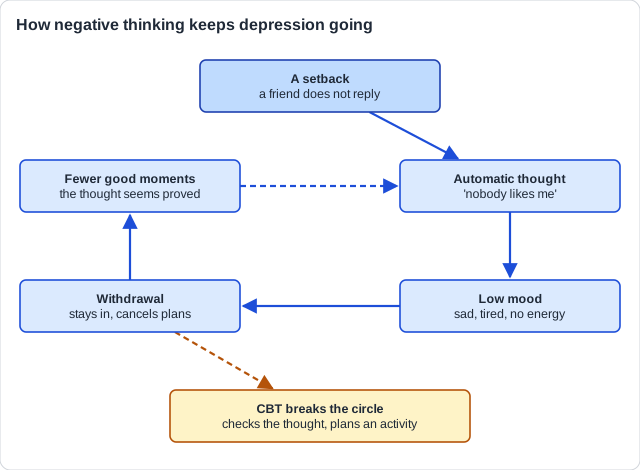
Key idea: A cognitive model explains how negative thinking can start depression and keep it going.
Beck's cognitive triad
Me
'I am worthless.' A negative view of the self.
The world
'Nothing goes right for me.' A negative view of experiences.
The future
'It will always be like this.' A negative view of what is to come.
Me · The world · The future
Beck's cognitive model says these three negative views filter every experience, so even good events are explained away. Cognitive therapy targets them directly.
Free preview
This is the free notes preview
You're reading the free notes. Aimnova Pro unlocks the full study experience — and you can try it with your first topic free to keep:
- FlashcardsLock in vocabulary and key terms with spaced repetition.
- Practice questionsAnswer exam-style questions and get instant AI marking.
- Mock exams & past-paper vaultSit full mocks and see exactly how examiners award marks.
- Personalised study planA daily plan built around your exam date and weak areas.
Key idea: If negative thinking helps cause depression, it should be there before the first episode, not only during it.
Evans and colleagues (2005) followed thousands of pregnant women in England, as part of a large birth-cohort study. Women whose answers showed more negative beliefs about themselves were more likely to develop depression in the following months, even though they were not depressed at the start.
What supports the model
- Negative beliefs can come before depression (Evans)
- CBT, which targets the thoughts, helps many people
- Explains why low mood keeps going
Where to be careful
- Negative thoughts are also a symptom
- Leaves out genes and brain chemistry
- Thinking is measured by self-report
Watch out: Cause or symptom? Depressed people think negatively, so a link alone cannot show which came first. Studies that measure thinking before depression starts answer this best.