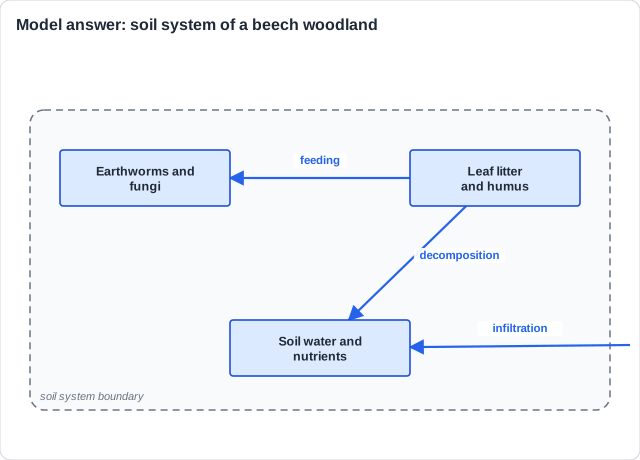
Boxes and arrows: A systems flow diagram shows what the soil stores, and what flows into it, out of it and within it. Learn the rules, then build one step by step.
The points to remember
- Storages are boxes (circles are accepted), each with a name.
- Flows are arrows, each with a label, pointing the way the matter moves.
- Inputs come in across the boundary; outputs leave across it.
- Flows within the soil join one storage to another.
- Only soil storages and flows: no photosynthesis, transpiration or trees above ground.
Remember it as: Boxes store, arrows flow; label everything.
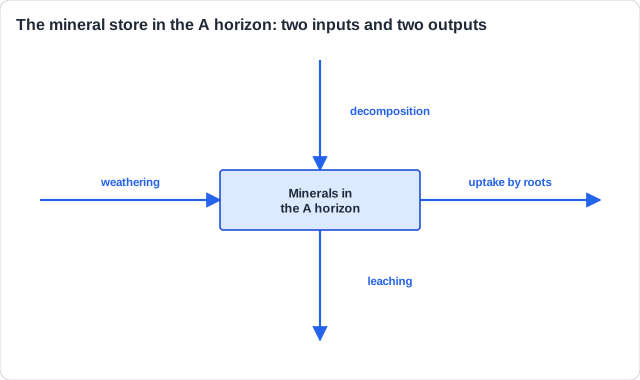
Real example: in a beech wood in Denmark, the minerals in the topsoil are one store. Decomposition of beech leaves adds to it; leaching carries minerals down and out. A question asking for 'leaching and decomposition' needs just this: one box, two labelled arrows.
Free preview
This is the free notes preview
You're reading the free notes. Aimnova Pro unlocks the full study experience — and you can try it with your first topic free to keep:
- FlashcardsLock in vocabulary and key terms with spaced repetition.
- Practice questionsAnswer exam-style questions and get instant AI marking.
- Mock exams & past-paper vaultSit full mocks and see exactly how examiners award marks.
- Personalised study planA daily plan built around your exam date and weak areas.
Start with the storages. We will build the soil system of Wytham Woods, an oak and beech wood near Oxford, England.
The points to remember
- Soil organisms: earthworms, fungi, bacteria, plant roots.
- Soil organic matter: leaf litter, dead roots and humus.
- Soil inorganic matter: minerals, nutrients and water (and air).
- Two storages are enough for most questions; three make a clearer diagram.
- Name them from the question: 'earthworms', not just 'organisms', if the data show earthworms.
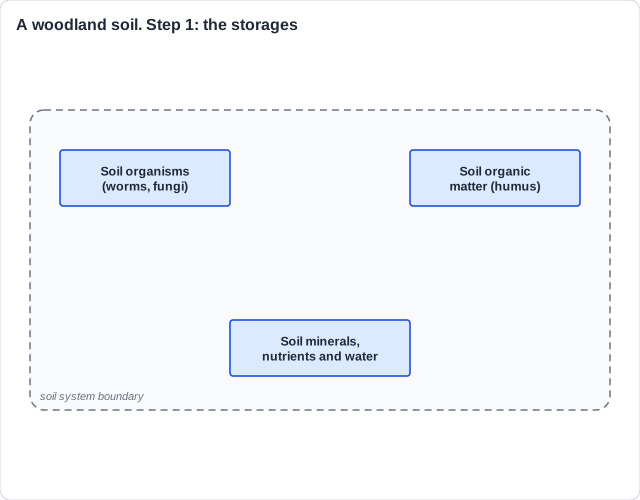
In Wytham Woods the organisms are earthworms and fungi, the organic matter is fallen oak and beech leaves and humus, and the inorganic store holds the soil water and its nutrients.
Never wonder what to study next
Get a personalized daily plan based on your exam date, progress, and weak areas. We'll tell you exactly what to review each day.
Next, the inputs. Each comes from outside the boundary and points into the storage it fills.
The points to remember
- Dead organic matter: leaf litter, dead animals, dung: into the organic matter store.
- Precipitation and infiltration: water into the inorganic store.
- Weathering of the parent rock: minerals into the inorganic store.
- Oxygen from the air: into the soil organisms (and air spaces).
- Draw each arrow from outside the boundary to the storage it fills.
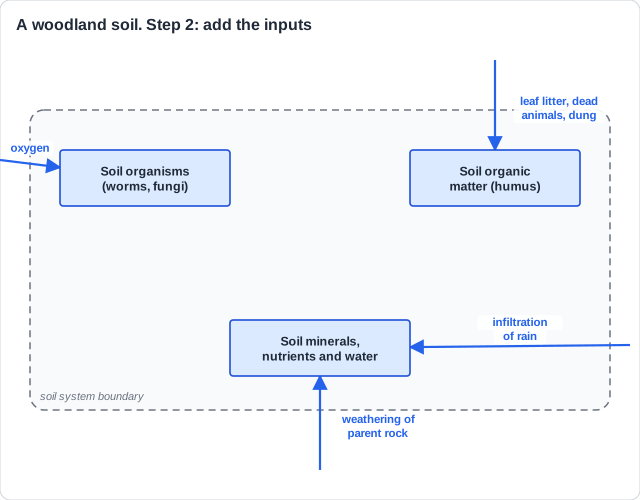
Start outside: An input arrow starts outside the dashed line. If it starts on another box, it is a flow within the soil.
Now join the storages. These flows are the transfers and transformations inside the soil.
The points to remember
- Death and waste: organisms into organic matter.
- Feeding (ingestion): organic matter into organisms.
- Decomposition: organic matter into minerals and nutrients.
- Uptake: minerals and water into organisms (roots).
- Each arrow joins two boxes and points the way the matter goes.
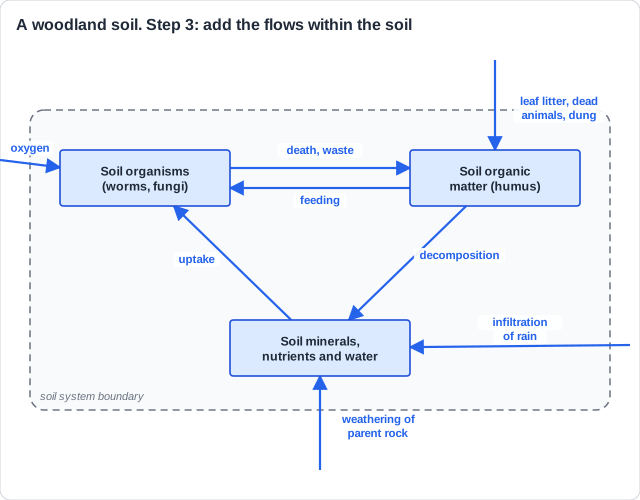
Two arrows, two directions: Feeding and death run between the same two boxes in opposite directions. Draw two separate arrows, each with its own label.
Stop wasting time on topics you know
Our AI identifies your weak areas and focuses your study time where it matters. No more overstudying easy topics.
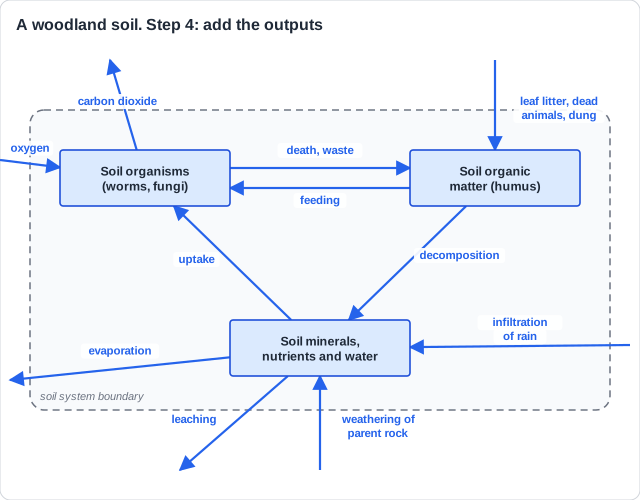
Last, the outputs, leaving across the boundary. Then check every label.
The points to remember
- Carbon dioxide from respiration: out of the organisms to the air.
- Leaching: dissolved nutrients out of the bottom of the soil.
- Evaporation: water vapour out of the top.
- Erosion and harvest are outputs too.
- Check: every box named, every arrow labelled and pointing the right way.
Earns the marks
- Named boxes for two or more storages
- Labelled arrows, the right way round
- Inputs and outputs of the soil
Gets no credit
- Pictures of worms and trees
- Arrows with no labels
- Photosynthesis or transpiration
Soil is a meeting point of the big cycles. Each flow in a soil diagram is a link to the water, carbon or nitrogen cycle.
The points to remember
- Water cycle: soil stores water; infiltration in, evaporation, uptake and percolation out.
- Carbon cycle: soil stores carbon in humus; litter in, CO2 out by respiration.
- Nitrogen cycle: soil bacteria fix, nitrify and denitrify nitrogen; roots take up nitrate.
- The same soil diagram can show all three: the flows are the links to the wider cycles.
Water
- In: infiltration.
- Out: evaporation, uptake, percolation to groundwater.
Carbon
- In: litter and dead roots.
- Out: carbon dioxide and methane from decomposers.
Nitrogen
- In: fixation, dead matter.
- Out: uptake, leaching, denitrification.
Real example: in the Amazon, nutrients cycle so fast between the leaf litter, the decomposers and the roots that the soil store stays small. A diagram of it would have very thick arrows and a thin inorganic box.
See how examiners mark answers
Answer exam-style questions with model answers. Learn exactly what earns marks and what doesn't.
How this comes up: Paper 2, Section A: construct a system diagram with two storages and two flows [3], from the data about a soil. Two named boxes and two labelled arrows earn all three marks.
A study in a beech wood in the Sonian Forest, Belgium, measured earthworm numbers, the depth of leaf litter and the water content of the soil.
Construct a system diagram for this soil, including two storages and two flows.
Model answer plan
See the mark-by-mark plan — for / against / judgement, with marking guidance — in study mode.