Sustainable development at Higher Level: The same definition as SL. At HL, weigh development today against the needs of future generations, and judge how far a shock such as a flood sets development back.
Practise this as you read
- Test a plan against all three aims.
- Weigh harmful and not-harmful effects, then judge.
Free preview
This is the free notes preview
You're reading the free notes. Aimnova Pro unlocks the full study experience — and you can try it with your first topic free to keep:
- FlashcardsLock in vocabulary and key terms with spaced repetition.
- Practice questionsAnswer exam-style questions and get instant AI marking.
- Mock exams & past-paper vaultSit full mocks and see exactly how examiners award marks.
- Personalised study planA daily plan built around your exam date and weak areas.
Better lives that last: sustainable development means improving people's lives today in a way that leaves enough for the people who come after us.
The points to remember
- Sustainable development meets the needs of the present without harming the ability of future generations to meet theirs.
- It applies sustainability to our social and economic development.
- Development means better lives: food, health, education, jobs and homes.
- The idea comes from the Brundtland Report (1987).
- Sustainability asks 'can it last?'; sustainable development asks 'can lives improve and still last?'
Remember it as: Meet today's needs; don't spend tomorrow's.
In Norway: most of the money from selling oil is saved in a fund worth more than a trillion US dollars, so future generations share the wealth. But the oil, once burned, adds to climate change for everyone.
Not just growth: Development is not the same as a bigger economy. A richer country with polluted rivers and a few people taking most of the wealth has not developed sustainably.
Get feedback like a real examiner
Submit your answers and get instant feedback — what you did well, what's missing, and exactly what to write to score full marks.
Sustainable development is a framework: a set of aims that guides how a town or country develops.
The points to remember
- Sustainable development is a framework: it guides how people and countries develop.
- Aim 1: economic stability, jobs and income that last.
- Aim 2: social equity, a fair share for everyone, now and in the future.
- Aim 3: ecological integrity, ecosystems kept healthy and working.
- The Brundtland Report added the social and economic sides to sustainability.
Economic stability
- Steady jobs and income that do not collapse when a resource runs out.
Social equity
- Health, education and a fair share for all groups, now and in future.
Ecological integrity
- Ecosystems kept healthy: resources replaced, wastes absorbed.
Where the idea came from: Before 1987, sustainability was mostly about conserving nature. The Brundtland Report, 'Our Common Future', added the social and economic sides: meeting people's needs fairly, now and in future.
Setbacks, and the other side: A natural hazard can set back a place's social and ecological development. But not everything it does is harmful.
The points to remember: harmful, and not
- Nature harmed: reefs, forests and habitats destroyed, so biodiversity and productivity fall.
- People harmed: crops and jobs lost, so hunger and poverty rise.
- Poverty can push people to overuse nature: hunting, or cutting trees for fuel.
- Many working-age people emigrate, leaving an older population behind.
- Rebuilding costs money and uses resources such as timber.
- But ecosystems adapted to hazards recover, and gaps let new growth in.
- Rebuilding can be better (stronger homes) and can bring a community together.
Real case: Cyclone Idai (2019) flooded central Mozambique just before harvest, destroying crops and homes, while the wetlands it flooded soon recovered.
Say why it matters: Give each effect AND what it does to development: 'crops destroyed, so families go hungry and lose their income'. Then weigh which kind of development, social or ecological, suffers longer.
Learn what examiners really want
See exactly what to write to score full marks. Our AI shows you model answers and the key phrases examiners look for.
How this comes up: Paper 1, the last question: using the resource booklet, discuss the effect of a hazard on development [6].
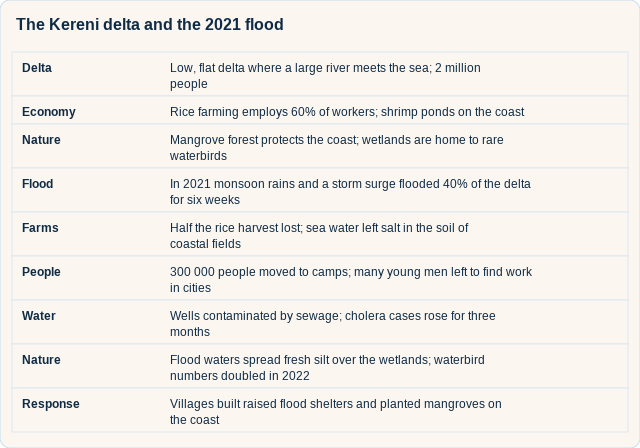
Figure 1 gives information about the Kereni delta and the 2021 flood.
Using Figure 1, discuss the effect of the flood on the social and ecological development of the Kereni delta.
Model answer plan
See the answer broken into clear points, with guidance on how each point earns marks.