System diagrams at Higher Level: Same rules as SL. At HL, use a diagram as evidence: read its sizes and check that inputs balance outputs.
Practise this as you read
- Draw a lab or local system from a description.
- Read a diagram drawn to scale, with figures.
Free preview
This is the free notes preview
You're reading the free notes. Aimnova Pro unlocks the full study experience — and you can try it with your first topic free to keep:
- FlashcardsLock in vocabulary and key terms with spaced repetition.
- Practice questionsAnswer exam-style questions and get instant AI marking.
- Mock exams & past-paper vaultSit full mocks and see exactly how examiners award marks.
- Personalised study planA daily plan built around your exam date and weak areas.
Start Studying Free Full access to Aimnova Pro · cancel anytime
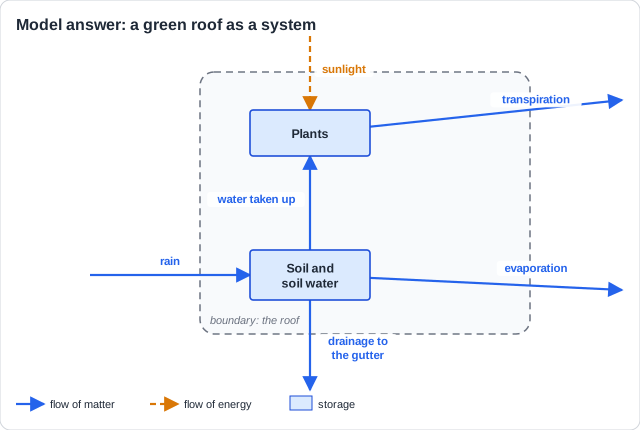
Boxes and arrows: A system diagram is a model on paper: storages are boxes, flows are arrows across and inside the boundary.
The rules
- Draw each storage as a box; write what it holds inside.
- Draw each flow as an arrow, pointing the way the matter or energy moves.
- Label every arrow with the process or with what moves.
- Inputs cross the boundary into the system; outputs leave it.
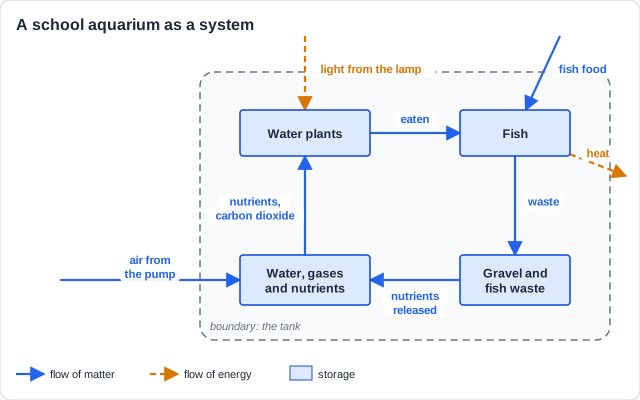
Lab systems count: A tank, a terrarium or a compost bin is a real system: you can measure its storages and flows.
Feeling unprepared for exams?
Get a clear study plan, practice with real questions, and know exactly where you stand before exam day. No more guessing.
Get Exam Ready FreeYour first topic is free to keep • No credit card required
Drawn to scale, a diagram shows at a glance where most of the water goes.
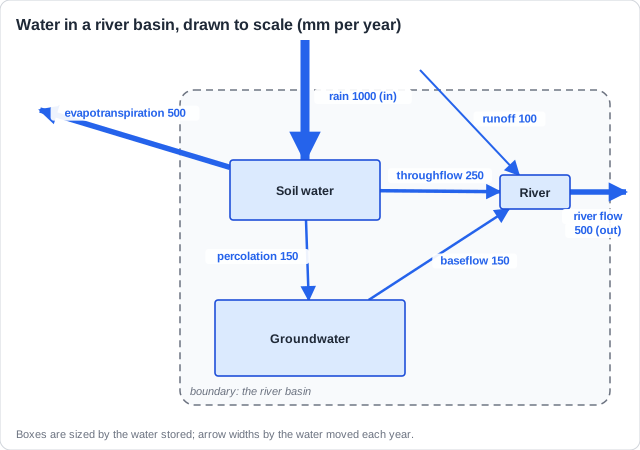
Check the budget: Inputs: rain 1000 mm. Outputs: evapotranspiration 500 + river 500 = 1000 mm. In equals out, so storages hold steady.
How this comes up: "Construct a system diagram for X, including two storages and two flows." You draw it.
IB-style questionConstruct[3 marks]
Construct a system diagram for a green roof on a city building, including two storages and two flows.
Model answer plan
See the mark-by-mark plan — for / against / judgement, with marking guidance — in study mode.