Herbivory at Higher Level: The same statement as SL. HL questions ask for plant defences against herbivores and herbivore adaptations, often both in one answer.
Practise this as you read
- State a way plants resist herbivory.
- Describe herbivore adaptations and plant defences.
Free preview
This is the free notes preview
You're reading the free notes. Aimnova Pro unlocks the full study experience — and you can try it with your first topic free to keep:
- FlashcardsLock in vocabulary and key terms with spaced repetition.
- Practice questionsAnswer exam-style questions and get instant AI marking.
- Mock exams & past-paper vaultSit full mocks and see exactly how examiners award marks.
- Personalised study planA daily plan built around your exam date and weak areas.
The big idea: Plants are tough to eat and hard to digest. Herbivores have adaptations for getting at them, breaking them down and coping with their toxins.
The points to remember
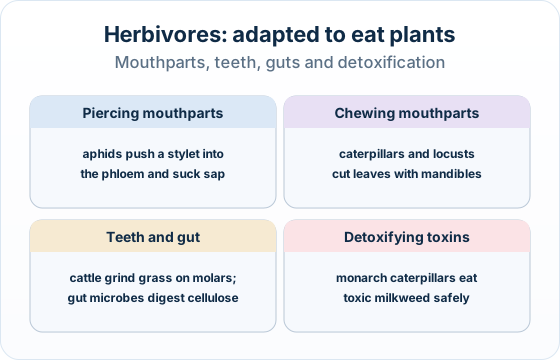
- Piercing mouthparts: aphids and other bugs suck sap through a stylet.
- Chewing mouthparts: caterpillars and locusts bite leaves with mandibles.
- Mammals: grinding molars, a long gut, and microbes that digest cellulose.
- Some herbivores can detoxify the toxins in plants.
Real example: the giraffe. Giraffes strip leaves from thorny acacia trees with a long, tough tongue and thick saliva, so the thorns do little to stop them.
Study smarter, not longer
Most students waste 40% of study time on topics they already know. Our AI tracks your progress and optimizes every minute.
The big idea: Plants cannot run away. They resist herbivores with physical structures and with toxic secondary compounds in their leaves and seeds.
The points to remember
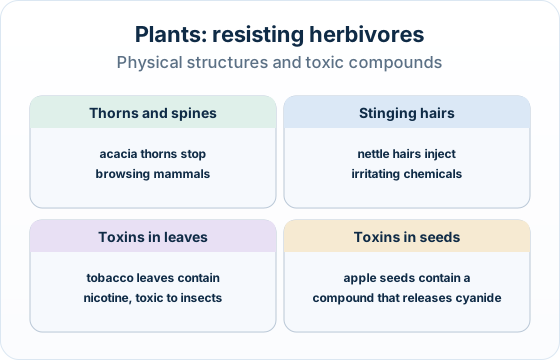
- Physical: thorns, spines and stinging hairs.
- Chemical: toxic secondary compounds in leaves and seeds.
- Some herbivores evolve ways to detoxify them: an arms race.
Remember it as: Herbivores: get in, break down, detoxify. Plants: spike, sting, poison.
Real example: monarch caterpillars. Milkweed leaves contain toxins that poison most animals; monarch butterfly caterpillars eat them safely and store the toxins, which makes them distasteful to birds.
Trap: Questions often ask for both sides: give herbivore adaptations and plant defences, with an example of each.
How it is asked: Expect one way plants resist herbivores, the benefit of plant toxins, or herbivore adaptations and plant defences together in a longer answer.
Outline adaptations of herbivores for feeding on plants and of plants for resisting herbivory.
Model answer plan
See the answer broken into clear points, with guidance on how each point earns marks.