Oxygen tolerance at Higher Level: The same statement as SL. HL questions name a microorganism and ask you to classify it by how it tolerates oxygen.
Practise this as you read
- Identify the group from a description.
- Distinguish between the three groups.
Free preview
This is the free notes preview
You're reading the free notes. Aimnova Pro unlocks the full study experience — and you can try it with your first topic free to keep:
- FlashcardsLock in vocabulary and key terms with spaced repetition.
- Practice questionsAnswer exam-style questions and get instant AI marking.
- Mock exams & past-paper vaultSit full mocks and see exactly how examiners award marks.
- Personalised study planA daily plan built around your exam date and weak areas.
Start Studying Free Full access to Aimnova Pro · cancel anytime
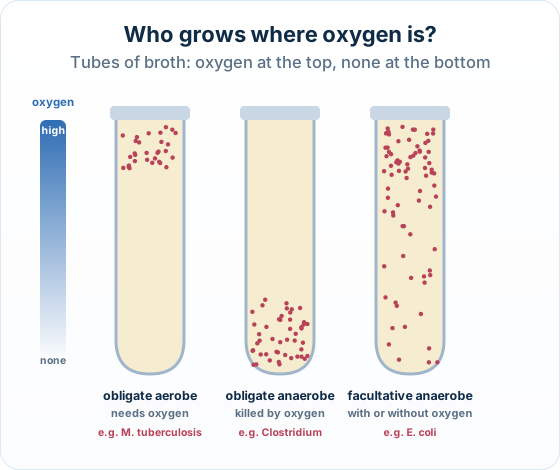
The big idea: Organisms differ in how they tolerate oxygen gas: some need it, some are harmed by it, and some manage with or without it.
The points to remember
- Obligate aerobe: must have oxygen, for aerobic respiration (most animals and plants).
- Obligate anaerobe: oxygen kills it or stops its growth; it lives only where there is none.
- Facultative anaerobe: uses oxygen when it is there, but can still make ATP without it (E. coli, yeast).
- Where a species can live depends on its tolerance of oxygen: part of its niche.
Remember it as: Obligate = no choice; facultative = can switch.
Real example: methanogens. Methane-producing archaea are obligate anaerobes: they live in waterlogged rice paddies, marsh mud and the stomachs of cattle, where there is no oxygen, and release methane.
Trap: Your muscles can respire anaerobically for a short time, but humans are still obligate aerobes: the body cannot survive without oxygen.
Know your predicted grade
Take timed mock exams and get detailed feedback on every answer. See exactly where you're losing marks.
Try Mock Exams FreeYour first topic is free to keep • No credit card required
How it is asked: Expect a named organism to classify, a condition an obligate aerobe needs, or the three groups to tell apart.
IB-style questionDistinguish[3 marks]
Distinguish between obligate aerobes, obligate anaerobes and facultative anaerobes.
Model answer plan
See the answer broken into clear points, with guidance on how each point earns marks.