aımnova
DashboardMy LearningCrash CoursesStudy Plan

Aimnova site navigation

Stay in the loop

Get the latest study resources and updates

New features, study tips and exam insights — straight to your inbox.

IB Diploma

  • IB Past Papers
  • IB Study Notes
  • IB Question Bank
  • IB Mock Exams
  • IB Revision

IB Subjects

  • IB Math AA
  • IB Math AI
  • IB Economics
  • IB Business Management
  • IB Physics
  • IB Biology
  • View all IB subjects→

IB Past Papers

  • IB Math AA HL Past Papers
  • IB Math AA SL Past Papers
  • IB Math AI HL Past Papers
  • IB Math AI SL Past Papers
  • IB Economics HL Past Papers
  • IB Economics SL Past Papers
  • IB ESS Past Papers
  • View all past papers→

Study Resources

  • Study Notes
  • Question Bank
  • Mock Exams
  • Crash Courses
  • Flashcards
  • Revision Guide
  • Exam Skills
  • Command Terms
  • Grade Calculator
  • Exam Timetable 2027

Aimnova

  • Features
  • Pricing
  • For Teachers
  • For Schools
  • For Parents
  • About Us
  • Blog
  • Contact
aımnova

IB study, practice and feedback built around the real exam.

TermsPrivacyCookies·© 2026 Aimnova. All rights reserved.d9e1c61

Aimnova is not affiliated with or endorsed by the International Baccalaureate Organization (IB).

NotesSports, Exercise and Health Science HLTopic 2.2The gut microbiome
Back to Sports, Exercise and Health Science HL Topics
2.2.64 min read

The gut microbiome (Sports, Exercise and Health Science HL)

IB Sports, Exercise and Health Science · Unit 2

AI-powered feedback

Stop guessing — know where you lost marks

Get instant, examiner-style feedback on every answer. See exactly how to improve and what the markscheme expects.

Try It Free

Contents

  1. 1A second set of workers in the gut
  2. 2What shapes it
  3. 3From microbes to nutrients and performance
  4. 4Exam-style question

This page is about the microbes living in your gut, what changes them, and how they affect the nutrients you get from food.

The gut microbiome: The gut microbiome is the huge community of microbes, mostly bacteria, living in the gut, most of them in the large intestine. A diverse microbiome, with many different kinds, is linked to better health.
Our example: Sana plays hockey. This term she needed a course of antibiotics, then lived on takeaways during exams, and noticed more stomach upsets in training.

Nutrients

  • Breaks down fibre we cannot digest
  • Makes some vitamins

Gut lining

  • Keeps the wall healthy
  • Helps uptake of nutrients

Health

  • Supports immune defence
  • Fewer gut problems in training
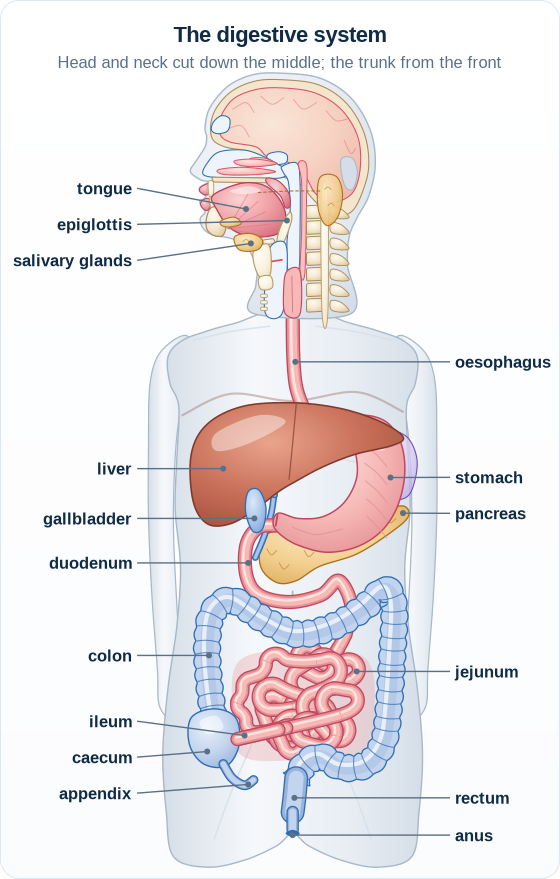
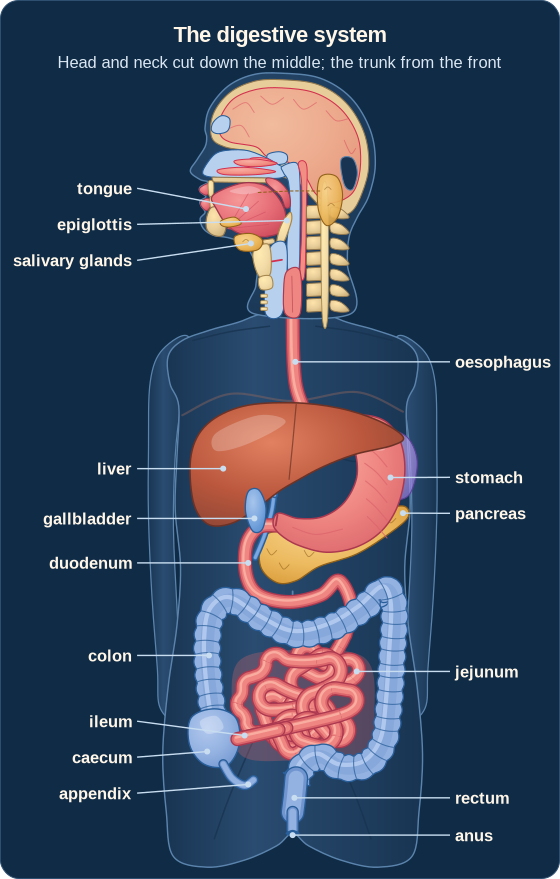
The head and neck cut down the middle (tongue, salivary glands, epiglottis, oesophagus behind the trachea), flowing into a front view of the digestive tract to the anus, with the liver, gallbladder, bile duct and pancreasThe head and neck cut down the middle (tongue, salivary glands, epiglottis, oesophagus behind the trachea), flowing into a front view of the digestive tract to the anus, with the liver, gallbladder, bile duct and pancreas
Most nutrients are absorbed in the small intestine; most gut microbes live in the large one.

Free preview

This is the free notes preview

You're reading the free notes. Aimnova Pro unlocks the full study experience — and you can try it with your first topic free to keep:

  • FlashcardsLock in vocabulary and key terms with spaced repetition.
  • Practice questionsAnswer exam-style questions and get instant AI marking.
  • Mock exams & past-paper vaultSit full mocks and see exactly how examiners award marks.
  • Personalised study planA daily plan built around your exam date and weak areas.
Start Studying Free Full access to Aimnova Pro · cancel anytime

Four things change the microbiome: genetics, diet, medications and lifestyle. Only genetics is out of the athlete's hands.

Four influences

InfluenceExamples
GeneticsThe microbes a person tends to host are partly inherited
Diet: helpsFibre, polyphenols (fruit, vegetables, tea, cocoa), fermented foods such as yoghurt
Diet: may harmDiets heavy in meat and dairy (fermented dairy such as yoghurt is the exception) and low in fibre; highly processed food
MedicationsAntibiotics kill helpful gut bacteria as well as harmful ones, so diversity falls
LifestylePoor sleep, stress and anxiety can upset it; regular exercise is linked to more diversity
Sana's term: Antibiotics cut her microbe diversity, then a low-fibre takeaway diet gave the microbes little to live on. More fibre and fermented foods help it recover.

Memorize terms 3x faster

Smart flashcards show you cards right before you forget them. Perfect for definitions and key concepts.

Try Flashcards FreeYour first topic is free to keep • No credit card required

The microbes change how much of each nutrient is available to you and how well it is taken up.

See it drawn, step by step

In My Learning, handwritten diagrams build one step at a time. Play, pause and replay each explanation until it clicks. Create your free account to try it.

Claim your free topic
Why it matters for performance: Better nutrient uptake and a healthy gut lining support recovery and immune defence, with fewer gut upsets in training. A poor microbiome can mean less available nutrients and more illness.
Careful with claims: Microbiome science is young and changing. Many probiotic products claim more than the evidence shows, so ask what was actually tested.

How this is tested — you say what shapes the microbiome or how it affects nutrient uptake. It comes up two ways:

Paper 1 — recall and data

  • Paper 1A asks what the microbiome does in nutrient uptake
  • Or which food may harm it

Paper 2 — explain and evaluate

  • Paper 2 asks you to outline influences on it
  • Or to explain how it affects health and performance
The microbes do not absorb for you: Gut microbes break down fibre and make short-chain fatty acids and some vitamins. You absorb those; the microbes do not absorb nutrients for your cells.
IB-style questionOutline[3 marks]

Outline three factors that could change the gut microbiome of a swimmer.

Model answer plan

See the answer broken into clear points, with guidance on how each point earns marks.

Claim your free topic

Exam tips

  • Four influences: genetics, diet, medications, lifestyle.
  • Gut microbes break down carbohydrates (fibre) and make short-chain fatty acids that are absorbed.
  • They also help make some vitamins; no single vitamin is needed in answers.
  • Fibre, polyphenols and fermented foods help; diets heavy in meat and dairy may harm.
  • Link the microbiome to nutrient uptake first, then to health and performance.

IB Exam Questions on The gut microbiome

Practice with IB-style questions filtered to Topic 2.2.6. Get instant AI feedback on every answer.

Practice Topic 2.2.6 QuestionsBrowse All Sports, Exercise and Health Science HL Topics

How The gut microbiome Appears in IB Exams

Examiners use specific command terms when asking about this topic. Here's what to expect:

  • Define

    Say exactly what the key terms in The gut microbiome mean.

    AO1
  • Describe

    Say what the processes or features in The gut microbiome are like, with the details that matter.

    AO2
  • Explain

    Give reasons WHY — cause and effect within The gut microbiome.

    AO3
  • Evaluate

    Weigh strengths AND limitations of approaches in The gut microbiome.

    AO3
  • Discuss

    Present arguments FOR and AGAINST with a balanced conclusion.

    AO3

See the full IB Command Terms guide

Related Sports, Exercise and Health Science HL Topics

Continue learning with these related topics from the same unit:

2.1.1Water and electrolyte balance2.1.2Dehydration and cardiac drift2.2.1Macronutrients as fuel2.2.2Fuelling strategies
View all Sports, Exercise and Health Science HL topics
Improve your exam techniqueCommand terms, paper structure, and mark-scheme tips for Sports, Exercise and Health Science HL
Previous2.2.5Vitamins in metabolismNextThe three energy systems2.3.1

6 practice questions on The gut microbiome

Students who practiced this topic on Aimnova scored 82% on average. Try free practice questions and get instant AI feedback.

Try 3 Free QuestionsView All Sports, Exercise and Health Science HL Topics