Studying this at HL: HL papers ask which macronutrient to take in a break and why a plan failed. Learn the clock before the start, the gut-comfort chain and the during-event rule, then adjust each one for the sport and the athlete.
The big idea: Eating before a race is not about feeling full. It has to do two jobs at once.
The two jobs
- Top up the fuel in your muscles.
- Leave your stomach empty enough to run on.
Our example: Kemi has a 10 km cross-country race at 10 a.m. on Saturday.
Everything in this micro is one decision she makes about food, and what that decision does to her.
You already know what the three macronutrients are — carbohydrates, proteins and lipids — and that most of Kemi's stored carbohydrate sits in her muscles and liver as glycogen, which is carbohydrate packed away ready to use. None of that changes here. What changes is the timing.
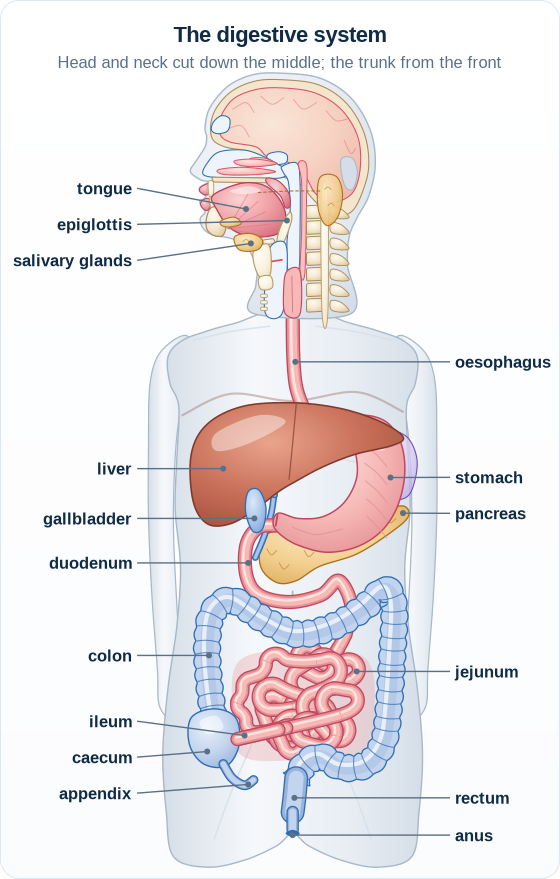
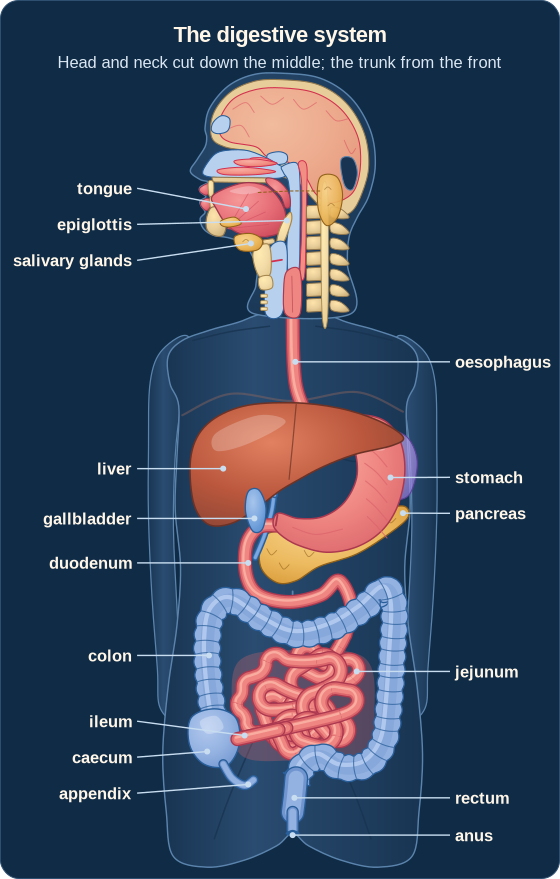
One word to get straight: Gastrointestinal just means the stomach and the gut.
So gastrointestinal comfort asks a simple question: does your stomach feel fine, or are you bent double with cramp at 6 km?
Kemi's race starts at 10. She does not eat at 9:45 and hope for the best. She works backwards from the gun, and the closer the start comes, the smaller and simpler the food gets.
| How long before the start | What goes in | What that looks like for Kemi |
|---|---|---|
| The day before | Normal meals, carbohydrate at every one | Rice, bread, pasta — nothing she has not eaten before |
| 3–4 hours | A proper meal, low in fat and low in fibre | Porridge with honey and a glass of juice |
| About 1 hour | A small carbohydrate snack, roughly 25 g | A banana |
| Last 20 minutes | Nothing solid | Sips of water only |
Why the gap matters: A meal needs blood in the gut to be digested. The second Kemi starts running, that blood is sent to her legs instead.
So anything still in her stomach at 10 a.m. is going to stay there.
Free preview
This is the free notes preview
You're reading the free notes. Aimnova Pro unlocks the full study experience — and you can try it with your first topic free to keep:
- FlashcardsLock in vocabulary and key terms with spaced repetition.
- Practice questionsAnswer exam-style questions and get instant AI marking.
- Mock exams & past-paper vaultSit full mocks and see exactly how examiners award marks.
- Personalised study planA daily plan built around your exam date and weak areas.
Now run the same morning badly. At 9 a.m. Kemi eats a big fried breakfast — eggs, sausage, buttered toast. An hour later she is on the start line feeling pleased with herself.
See it drawn, step by step
In My Learning, handwritten diagrams build one step at a time. Play, pause and replay each explanation until it clicks. Create your free account to try it.
The three things that sit heaviest: Fat, fibre and sheer size are what keep food in the stomach longest.
That is the real reason the pre-event meal is carbohydrate-based and low in fat — not because carbohydrate is magic, but because it leaves the stomach fastest.
Feeling unprepared for exams?
Get a clear study plan, practice with real questions, and know exactly where you stand before exam day. No more guessing.
Does Kemi need to eat during her 10 km? No. She is out there for about 45 minutes, and her stored glycogen covers that easily.
What decides it is how long the event lasts — not how hard it feels.
Under an hour
- Stored glycogen covers the whole thing
- Nothing needs to go in during it
- Kemi's 10 km sits here
One to two and a half hours
- Stores start running low near the end
- Roughly 30–60 g of carbohydrate an hour
- A sports drink, a gel or a few chews
Longer than that
- Stores will not last, so fuel from early on
- More per hour, taken in small regular amounts
- Her marathon in March sits here
Two ways to ruin it: Too much at once. A whole gel swallowed dry at 20 km upsets the gut for the same reason a heavy meal does.
Something new on the day. Whatever she plans to use, she uses it in training first, so her gut is used to it.
What about protein and lipids?: Not during the event. Both are slow to digest, and slow digestion is exactly the problem being avoided.
During exercise, carbohydrate is the one that gets in fast enough to be worth taking.
A good plan is adjusted — for the activity, and for the person doing it. The thinking is the same every time; only the numbers move.
A long endurance event
- Hours long, so fuel has to go in during it
- Running shakes the gut about, so drinks and gels are easier to take than solid food
- Every item has been practised in training first
A stop-start team game
- Around 90 minutes of bursts, so stores mostly cover it
- The breaks are fixed, so half time is the feed — not whenever she fancies it
- A carbohydrate drink beats anything solid in a ten-minute break
Adjusting for the person
Sex differences
Advice like 60 g an hour is an average, and much of the research behind it was done on men. Amounts work better set per kilogram of body mass, so a smaller athlete takes less. Gut comfort also varies from person to person, which is why each athlete tests their own plan.
Age
A 13-year-old has a smaller stomach and is still growing, so smaller, more frequent feeds work better than one big meal. Older adults often digest more slowly and feel less hungry, so food has to be planned rather than waited for.
Activity level
Kemi trains six days a week, so she refuels after every session. Someone who jogs once a week needs no gels at all — ordinary meals cover everything they do.
Two questions set the whole plan: How long will this last? That decides whether anything goes in during it.
How big is the person doing it? That decides how much. Everything else follows from those two.
Memorize terms 3x faster
Smart flashcards show you cards right before you forget them. Perfect for definitions and key concepts.
How this is tested — you say what to eat, when, and why, for a named event and person. It comes up two ways:
Paper 1 — recall and data
- Paper 1A asks about timing, or what to avoid before a start
- Paper 1B may give a table of intake and race times to read
Paper 2 — explain and evaluate
- Paper 2 asks you to outline or evaluate a fuelling plan
- Or to state what to take in a break
- Marks link the food, the timing and the effect
Naming the food and stopping: "Carbohydrate" is a one-mark state answer at most. In outline or explain questions add when, how much, and why it suits gut comfort or fuel.
A rugby sevens player has two hours between matches in a tournament. Outline a fuelling strategy for that gap.
Model answer plan
See the answer broken into clear points, with guidance on how each point earns marks.
Exam tips
- In a short break such as half-time, take carbohydrate, usually as a drink.
- Give the timing with the food: a meal 3-4 hours before, a small snack about an hour before.
- Stomach discomfort: say the blood went to the muscles, so digestion slowed.
- Strategies are about the food: practise amount and timing, choose easily digested foods.
- Fuel during an event only when it lasts over about an hour: 30-60 g of carbohydrate an hour.