The big idea: You already know the shape of a negative feedback loop: something drifts, something notices, something corrects it.
One shape, used twice: Here that same shape is used twice — once on the heart, once on blood sugar. Learn the shape and both cases fall out of it.
Our example: Tess plays a full 90 minutes of football on a Saturday morning. She ate porridge an hour before kick-off and nothing since.
Both loops in this micro are running inside that one match.
What is held steady
- Heart loop: blood pressure, and the oxygen arriving at the muscles
- Sugar loop: blood glucose concentration, which just means how much sugar is in the blood
- Neither of them is heart rate
What notices the drift
- Heart loop: baroreceptors, pressure sensors in the big arteries, and chemoreceptors watching the gases
- Sugar loop: the pancreas itself, checking the blood running through it
What does the correcting
- Heart loop: nerves reaching the heart and changing how fast it beats
- Sugar loop: insulin and glucagon, acting on the liver and the muscles
Tess's heart rate swings from 68 to 172 and back to 92. Her blood sugar reading barely moves at all: 5.4 millimoles per litre before kick-off, 5.1 at the final whistle.
That gap is the whole point. The number that moves is the correction. The number that stays still is what the loop is protecting.
Free preview
This is the free notes preview
You're reading the free notes. Aimnova Pro unlocks the full study experience — and you can try it with your first topic free to keep:
- FlashcardsLock in vocabulary and key terms with spaced repetition.
- Practice questionsAnswer exam-style questions and get instant AI marking.
- Mock exams & past-paper vaultSit full mocks and see exactly how examiners award marks.
- Personalised study planA daily plan built around your exam date and weak areas.
It is easy to assume heart rate is the thing being kept constant. It cannot be — it moved by more than a hundred beats a minute during Tess's match.
What heart rate is for: Heart rate is what the body changes in order to keep something else the same: the pressure of the blood, and the oxygen reaching the working muscles.
One loop, around one sprint
Something drifts
Tess sprints onto a through ball. The vessels in her leg muscles open up and take in more blood, so the pressure in her arteries starts to fall and the carbon dioxide in her blood starts to climb.
Something notices
Baroreceptors — pressure sensors in the wall of the aorta and the neck arteries — feel that drop. Chemoreceptors feel the carbon dioxide rise. Both send the news in.
The control centre decides
A patch of the brain stem that runs the heart compares what is arriving with what it wants, and works out how big a correction is needed.
The correction goes out
Nerves reach the heart and speed it up, and each beat pushes out more blood. Pressure comes back up and more oxygen arrives at her legs.
The trigger disappears
With the pressure restored, the baroreceptors stop reporting a drop. The reason for the correction is gone, so the correction eases off. That is what makes the feedback negative.
Ask what would go wrong if nothing happened: If Tess's heart stayed at 68 while she sprinted, her blood pressure would keep falling and her legs would run short of oxygen.
The rise in heart rate is the fix, not the problem.
Feeling unprepared for exams?
Get a clear study plan, practice with real questions, and know exactly where you stand before exam day. No more guessing.
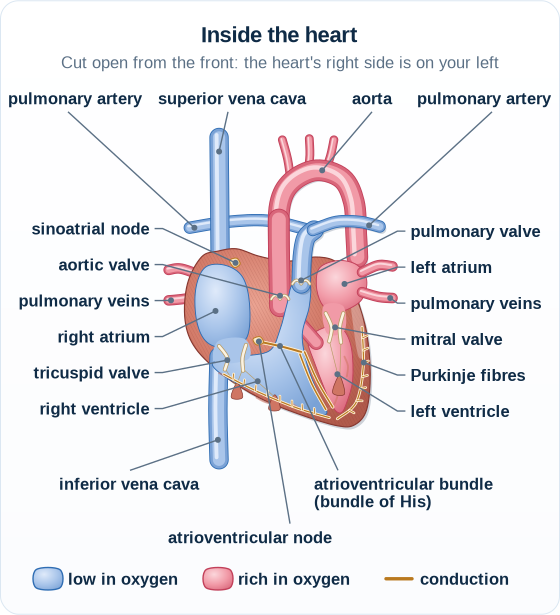
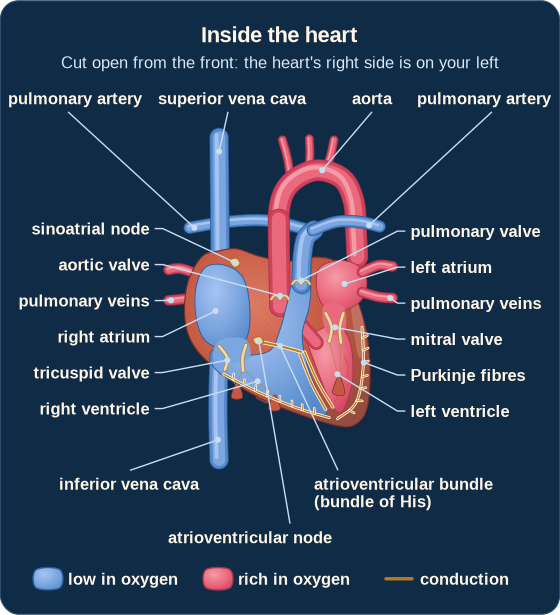
The loop cannot make the heart beat. That was already happening: the sinoatrial node fires on its own, and that is the intrinsic part — intrinsic meaning it comes from inside the heart itself.
The loop's only lever: So a loop that needs the heart to speed up has only one lever. Everything reaching the heart from outside is the extrinsic part.
Intrinsic — the baseline
- Comes from inside the heart: the sinoatrial node firing by itself
- Runs whether any loop is watching or not
- The loop cannot switch it off — only push it about
- Tess's heart would still beat with every nerve to it cut
Extrinsic — the loop's only lever
- Comes from outside the heart: nerves from the brain stem, and hormones in the blood
- This is the arm the feedback loop actually controls
- Pushed up when the sensors report a problem
- Eased off again once they stop reporting one
The same picture read as a loop: the node's own rate is the baseline that never changes, and every move in the number on the right is the loop correcting.
Interactive diagram
Explore the labelled diagram, charts and maps for this topic in full study mode.
Extrinsic does not mean outside the body: It means outside the heart.
A nerve from Tess's own brain stem is extrinsic. So is the epinephrine in her own blood. The only intrinsic thing here is the heart's own pacemaker.
Now the second loop. The thing held steady is blood glucose concentration.
One organ, two jobs: What is neat here is that one organ does two of the loop's jobs. The pancreas both notices the drift and sends out the correction, so there is no separate sensor to learn.
The loop, running both ways
The level drifts up
Tess's porridge is digested and sugar moves into her blood. The pancreas picks up the rise and releases insulin.
Insulin corrects it
Sugar is taken out of the blood and stored, so the level comes back down — and the pancreas stops releasing insulin.
The level drifts down
An hour of running later, her muscles have taken the spare sugar out of her blood. The pancreas picks up the fall and releases glucagon.
Glucagon corrects it
The liver lets its stored sugar back out into the blood, so the level comes back up — and the pancreas stops releasing glucagon.
One loop with two correcting arms. Each hormone only appears once the level has already moved, and goes away again once it is back.
Interactive diagram
Explore the labelled diagram, charts and maps for this topic in full study mode.
Notice what switches the hormones off: Nothing else does it. The correction itself removes the drift that set it going.
A loop that shuts itself down like that is exactly what negative feedback means.
Memorize terms 3x faster
Smart flashcards show you cards right before you forget them. Perfect for definitions and key concepts.
Here is the part that looks wrong the first time you read it.
The puzzle: Tess is pulling sugar out of her blood as fast as her legs can take it. Insulin is the hormone that moves sugar out of the blood. And her body turns insulin down.
Why turning it down is the right move
The pancreas is told to ease off
The same sympathetic branch that speeds Tess's heart also reaches her pancreas, and the epinephrine in her blood adds to it. Together they limit the release of insulin.
So the liver keeps giving
Insulin's message to the liver is store it. With insulin low, the liver carries on letting sugar out into the blood instead of locking it away — which is what her legs need.
The muscle gets its sugar anyway
Uptake means taking sugar out of the blood and into a cell. A contracting muscle opens its own doorways for sugar, without waiting to be told by insulin.
So the level holds
Sugar leaves the liver at roughly the rate the working muscles take it up. Tess's reading goes 5.4 to 5.1 across ninety minutes — barely a move.
What would happen if insulin stayed high?: The liver would be storing sugar away at the very moment Tess's muscles were emptying the blood of it.
Her blood sugar would drop fast and she would have nothing left to run on.
Say both halves: Exercise limits the release of insulin, and exercise helps glucose get into the muscle.
They sound like opposites and they are not. The first protects the level in the blood; the second feeds the muscle.
And with training: Regular aerobic training makes cells more sensitive to insulin, so less insulin is needed and muscle takes up glucose more readily. During exercise the glucose gradient into the muscle also rises, so uptake goes up even while insulin falls.
How this is tested — you take a named change during exercise and place it in a feedback loop — what drifted, what noticed, and what corrected it. It comes up two ways:
Paper 1 — recall and data
- Multiple choice on which hormone or which nerve corrects a named drift
- A blood glucose or heart rate trace, asking what is happening at a marked point
- One mark, so the part of the loop has to be named exactly
Paper 2 — explain and evaluate
- Outline how blood glucose is regulated during a long game
- Explain why insulin release falls during exercise even though glucose uptake rises
- Marks for naming the sensor, the correction, and what is being held steady
The trap: correcting the wrong number: Homeostasis keeps heart rate constant throws the answer away. Heart rate is the correction. What is held steady is the blood pressure and the oxygen reaching the muscles. Name the thing that stays still, not the thing that moves.
During a 90-minute football match a player eats nothing, yet her blood glucose concentration stays close to its starting value. Explain how this level is maintained. [4]
Model answer plan
See the answer broken into clear points, with guidance on how each point earns marks.
Where marks are lost: Her muscles use the sugar, so it goes down describes the problem, not the fix. The marks are for the correction.
And naming glucagon on its own is one mark. Say what it makes the liver do.
Exam tips
- Heart excitation: the SA node fires, the atria contract, the AV node delays, then the ventricles contract.
- In exercise insulin falls, yet muscle glucose uptake rises: a steeper glucose gradient and greater insulin sensitivity.
- Regular aerobic training: less insulin needed, more glucose taken up by muscle.
- Say both halves of a loop: what detects the change and what corrects it.