Every use leaves waste: Everything we take from nature, from food to metal, leaves something behind. One way to sort waste is by its source.
Waste by source
- Using natural resources always makes waste: what is left over or thrown away.
- Source = where the waste comes from.
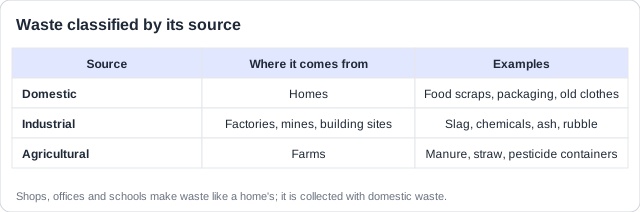
- Domestic waste comes from homes: food scraps, packaging, old clothes, broken furniture.
- Industrial waste comes from factories, mines and building sites: slag, chemicals, ash, rubble.
- Agricultural waste comes from farms: manure, straw and crop stalks, pesticide containers.
- Shops, offices and schools make waste like a home's; with homes it is municipal solid waste.
Real example: every autumn, farmers in Punjab, India, burn the rice straw left after harvest to clear their fields fast. This agricultural waste adds smoke to the smog over Delhi.
Remember it as: Source is where it came from; type is what it is.
Free preview
This is the free notes preview
You're reading the free notes. Aimnova Pro unlocks the full study experience — and you can try it with your first topic free to keep:
- FlashcardsLock in vocabulary and key terms with spaced repetition.
- Practice questionsAnswer exam-style questions and get instant AI marking.
- Mock exams & past-paper vaultSit full mocks and see exactly how examiners award marks.
- Personalised study planA daily plan built around your exam date and weak areas.
The second way to sort waste is by its type. The guide names three types to know: e-waste, food and biohazardous materials.
Waste by type
- Type = what the waste is made of or how it behaves.
- E-waste: thrown-away electrical goods; holds gold and copper but also lead and mercury.
- Food waste: food lost in homes, restaurants and shops; it rots and gives off methane.
- Biohazardous waste: used needles, blood, swabs, masks; it can spread disease.
- Other types: hazardous (toxic, flammable, corrosive), radioactive, plastic, construction rubble.
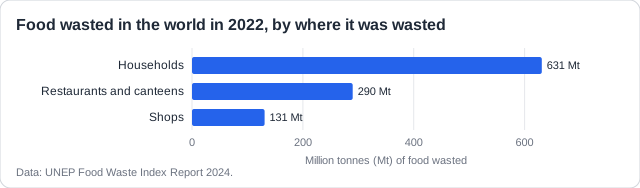
Real example: in 2022 the world wasted 1.05 billion tonnes of food, 60% of it in homes: about 79 kg per person. In 2022 people also threw away 62 million tonnes of e-waste, and only 22.3% was recorded as properly recycled.
Practice with exam-style questions
Answer exam-style questions and get AI feedback that shows you exactly what examiners want to see in a full-marks response.
Two labels on every item: Source and type are two different labels. A question asks for one of them: read which.
Source and type together
- One item has both a source and a type: name the one the question asks for.
- A phone thrown out of a home: source domestic, type e-waste.
- Hazardous waste is toxic, flammable, corrosive or reactive; it needs special handling.
- Radioactive waste needs long-term, guarded storage.
- The type decides how waste must be collected and treated, not only where it came from.
Sorted by source
- Domestic: homes
- Industrial: factories, mines, building
- Agricultural: farms
Sorted by type
- E-waste
- Food
- Biohazardous
- Hazardous, radioactive, plastic
Real example: an old smartphone thrown out of a London home is domestic waste by source and e-waste by type. It holds gold and copper worth recovering, and lead and other toxic metals that must not reach a landfill.
Do not mix the labels: Asked for a source? Give where it came from (a farm, a factory, a home). Asked for a type? Give what it is (e-waste, food, biohazardous).
How this comes up: Paper 2, Section A: a figure about ocean plastic, then a one-mark question on where it came from.
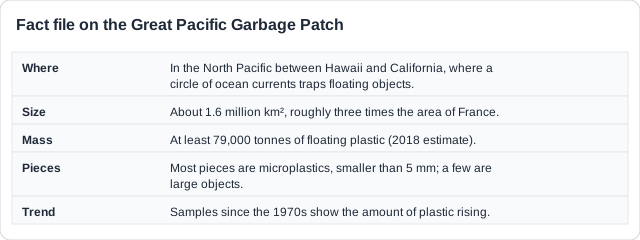
Figure 1 is a fact file on the Great Pacific Garbage Patch.
State a possible source of the plastic waste found in the Great Pacific Garbage Patch.
Model answer plan
See the mark-by-mark plan — for / against / judgement, with marking guidance — in study mode.