Unlocking the energy in food: cellular respiration releases the energy stored in glucose and turns it into a chemical form that cells can use straight away.
The points to remember
- Cellular respiration happens in every living cell, day and night.
- It breaks down glucose and releases the energy stored in it.
- It turns that energy into a chemical form the cell can use easily.
- Plants respire all the time too; they photosynthesise only in the light.
- In words (see 2.2.3): glucose + oxygen → carbon dioxide + water.
- Not all the energy reaches the usable form: some is released as heat (see 2.2.7).
Remember it as: Glucose is the fuel; respiration hands the cell its usable energy.
Real example: apples keep respiring after they are picked, using up their stored sugar. Fruit growers keep them in cold stores with very little oxygen, which slows respiration so the apples stay fresh for many months.
Two common mistakes: Respiration releases energy; it does not make it (energy cannot be created, see 2.2.2). And respiration is not breathing: breathing moves air in and out of the lungs, while respiration happens inside every cell.
Free preview
This is the free notes preview
You're reading the free notes. Aimnova Pro unlocks the full study experience — and you can try it with your first topic free to keep:
- FlashcardsLock in vocabulary and key terms with spaced repetition.
- Practice questionsAnswer exam-style questions and get instant AI marking.
- Mock exams & past-paper vaultSit full mocks and see exactly how examiners award marks.
- Personalised study planA daily plan built around your exam date and weak areas.
Why do cells need this energy? Every job that keeps a cell alive and working is an active process.
What cells use the energy for
- The released energy powers active processes: jobs a cell does that need energy.
- Movement: muscles contracting, a heart beating.
- Growth and repair: building new cells and body tissue.
- Active transport: pumping substances into or out of cells, such as roots taking in minerals.
- Nerve impulses, and making new chemicals the body needs.
- More activity means faster respiration: more glucose and oxygen are used.
Remember it as: Move, grow, repair, pump, signal: all paid for by respiration.
Animals
- Muscles move the body.
- Nerves carry messages.
Plants
- Roots pump in minerals.
- New leaves and shoots grow.
Every cell
- Repairs damage.
- Builds new chemicals.
Real example: every year about 1.5 million wildebeest walk hundreds of kilometres around the Serengeti in Tanzania and the Masai Mara in Kenya, following the rains. Respiration in their muscle cells releases the energy for every step.
Get feedback like a real examiner
Submit your answers and get instant feedback — what you did well, what's missing, and exactly what to write to score full marks.
How this could come up: Paper 2, Section A: a chart about respiration. Explain what the data show [2].
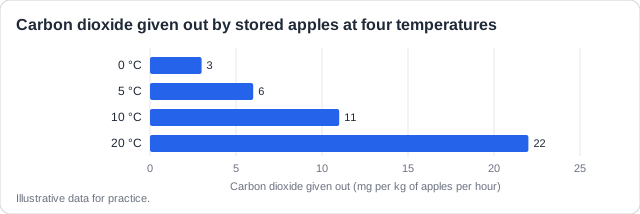
Figure 1 shows the carbon dioxide given out by stored apples at four temperatures.
Explain why apples kept at 0 °C stay fresh for longer than apples kept at 20 °C.
Model answer plan
See the mark-by-mark plan — for / against / judgement, with marking guidance — in study mode.