Sustainability: can it last?: Sustainability means keeping a system working over the long term, without leaving future generations worse off.
Long term
- Keep it working for years to come.
People + nature
- Protect nature while meeting people’s needs.
Future generations
- Leave resources and healthy systems for people after us.
Example: fishing
Sustainable fishing
- Catch no more fish than the population replaces.
- Enough remain to breed → fishing can continue.
Unsustainable fishing
- Catch fish faster than the population replaces them.
- Fewer remain → the population shrinks.
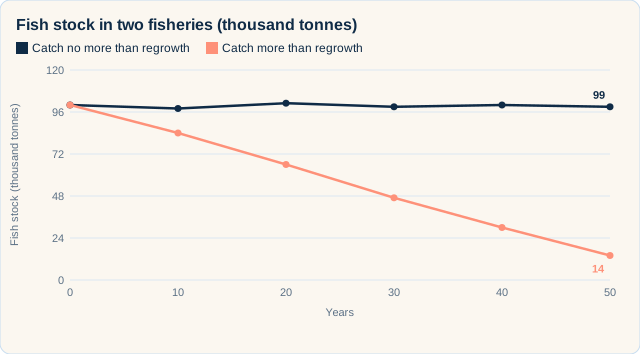
The rule for renewable resources: Use them no faster than nature replaces them. A healthy fish population also needs suitable habitat and protection from pollution.
Free preview
This is the free notes preview
You're reading the free notes. Aimnova Pro unlocks the full study experience — and you can try it with your first topic free to keep:
- FlashcardsLock in vocabulary and key terms with spaced repetition.
- Practice questionsAnswer exam-style questions and get instant AI marking.
- Mock exams & past-paper vaultSit full mocks and see exactly how examiners award marks.
- Personalised study planA daily plan built around your exam date and weak areas.
Sustainability is about socio-ecological systems: people and nature linked together, such as a fishing village and its sea.
Long term
- Can it carry on for decades, not just this year?
Future generations
- Will they have the same chances we have?
Resilience
- Can the system resist, recover or adapt (1.2.16)?
Resilience helps: A more resilient system is usually more sustainable. A forest with many species survives a pest that would destroy a plantation of one.
Know your predicted grade
Take timed mock exams and get detailed feedback on every answer. See exactly where you're losing marks.
How this comes up: The last question on Paper 1: using the whole resource booklet, how sustainable is this place [6]?
How to judge a place
- Sort the evidence into for and against sustainability.
- Every point uses the figure and gives a reason.
- Up to [4] on each side.
- End with a balanced conclusion [1]: which side weighs more, and why.
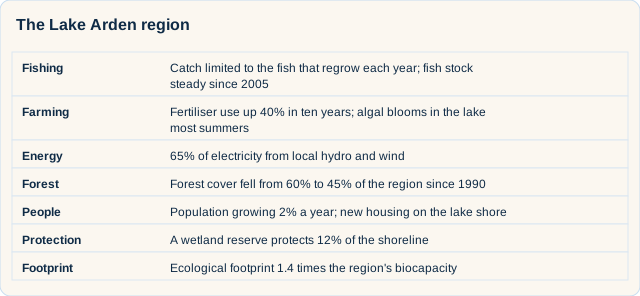
Figure 1 gives information about the Lake Arden region.
Using all the information in Figure 1, to what extent is the Lake Arden region managing its resources sustainably?
Model answer plan
See the answer broken into clear points, with guidance on how each point earns marks.