The environmental movement at Higher Level: At HL, trace each influence to what it actually changed: a law, a treaty, a shift in public opinion.
Practise this as you read
- Name the influence and its category.
- Follow it to the change it caused.
Free preview
This is the free notes preview
You're reading the free notes. Aimnova Pro unlocks the full study experience — and you can try it with your first topic free to keep:
- FlashcardsLock in vocabulary and key terms with spaced repetition.
- Practice questionsAnswer exam-style questions and get instant AI marking.
- Mock exams & past-paper vaultSit full mocks and see exactly how examiners award marks.
- Personalised study planA daily plan built around your exam date and weak areas.
The environmental movement was not planned. It grew from moments that changed what people believed and demanded.
A problem
- A reactor melts down
Awareness
- Images reach every home
Action
- A country changes its energy plan
Seven kinds of influence
- Individuals: an activist
- Literature: an author
- Media: a film or documentary
- Disasters
- International agreements
- New technologies
- Scientific discoveries
Practice with real exam questions
Answer exam-style questions and get AI feedback that shows you exactly what examiners want to see in a full-marks response.
An activist who planted a movement, and an author who started one.
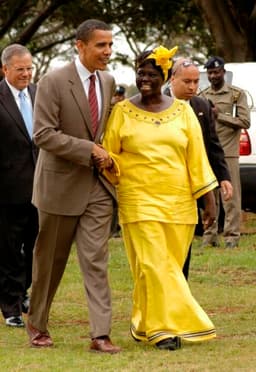
Wangari Maathai
1940–2011, activist
Founded Kenya's Green Belt Movement (1977), which paid women to plant trees on eroded land.
What followed
- Tens of millions of trees planted.
- Nobel Peace Prize (2004), linking environment and rights.
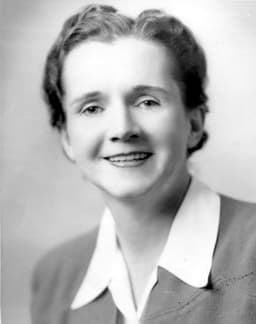
Rachel Carson
1907–1964, author
Silent Spring (1962) traced how DDT accumulated through food chains and harmed birds of prey.
What followed
- The US Environmental Protection Agency (1970).
- DDT banned on US farms (1972).
Media: Breaking Boundaries (2021)
- A documentary with David Attenborough and Johan Rockström.
- Explained the planetary boundaries to a global audience.
Disaster: Fukushima, Japan (2011)
- A tsunami caused a nuclear meltdown.
- If it could happen in Japan, many asked, was nuclear power safe?
- Germany decided to close all its nuclear plants.
Different routes to the same end: A documentary persuades slowly; a disaster shocks at once. Both change what the public will accept.
Feeling unprepared for exams?
Get a clear study plan, practice with real questions, and know exactly where you stand before exam day. No more guessing.
Agreement
- Montreal Protocol (1987).
- Phased out chemicals that destroy ozone.
Technology
- The Green Revolution (1960s).
- Raised yields, but fertiliser runoff fed new concerns.
Science
- Pesticide toxicity.
- DDT was found to build up in food chains.
Influences cut both ways: A technology can solve one problem and start a movement against its side effects, as the Green Revolution did.
How this comes up: Paper 2 part (a) [4]: four areas of influence, each named with an example.
With reference to named examples, identify four areas of influence that have shaped the environmental movement.
Model answer plan
See the mark-by-mark plan — for / against / judgement, with marking guidance — in study mode.
Set it out for the marker: Four marks, four short paragraphs, four different areas.