The big idea: Organisms differ in how they tolerate oxygen gas: some need it, some are harmed by it, and some manage with or without it.
The points to remember
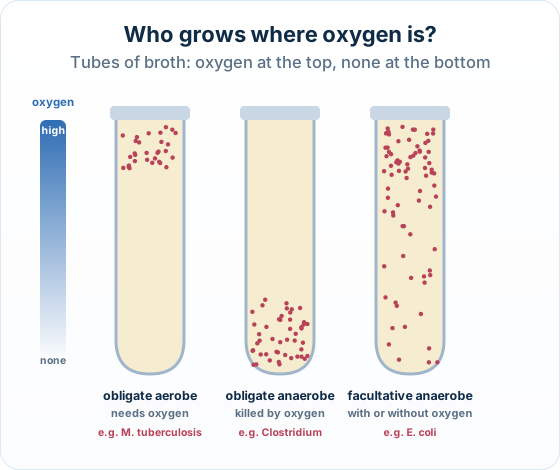
- Obligate aerobe: must have oxygen, for aerobic respiration (most animals and plants).
- Obligate anaerobe: oxygen kills it or stops its growth; it lives only where there is none.
- Facultative anaerobe: uses oxygen when it is there, but can still make ATP without it (E. coli, yeast).
- Where a species can live depends on its tolerance of oxygen: part of its niche.
Remember it as: Obligate = no choice; facultative = can switch.
Real example: Clostridium botulinum. Clostridium botulinum is an obligate anaerobe: it grows in badly sealed cans and jars, where there is no oxygen, and makes the toxin that causes botulism.
Trap: Your muscles can respire anaerobically for a short time, but humans are still obligate aerobes: the body cannot survive without oxygen.
Free preview
This is the free notes preview
You're reading the free notes. Aimnova Pro unlocks the full study experience — and you can try it with your first topic free to keep:
- FlashcardsLock in vocabulary and key terms with spaced repetition.
- Practice questionsAnswer exam-style questions and get instant AI marking.
- Mock exams & past-paper vaultSit full mocks and see exactly how examiners award marks.
- Personalised study planA daily plan built around your exam date and weak areas.
Start Studying Free Full access to Aimnova Pro · cancel anytime
How it is asked: Expect a named organism to classify, a condition an obligate aerobe needs, or the three groups to tell apart.
IB-style questionDistinguish[3 marks]
Distinguish between obligate aerobes, obligate anaerobes and facultative anaerobes.
Model answer plan
See the answer broken into clear points, with guidance on how each point earns marks.