The big idea: Almost all living things use the same genetic code. The best explanation is that they all inherited it from one common ancestor.
The points to remember
- The genetic code is the set of rules for which three-base codon codes for which amino acid.
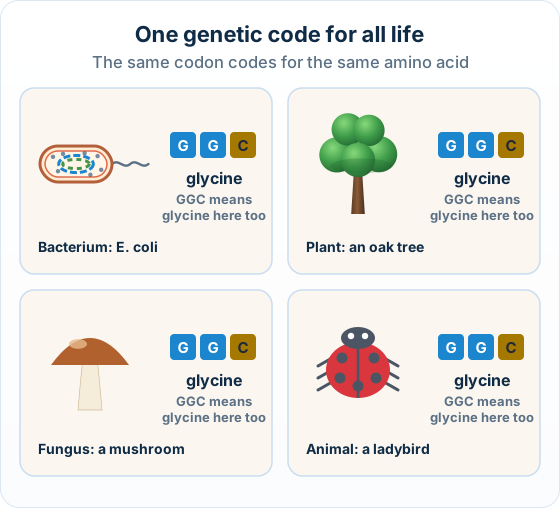
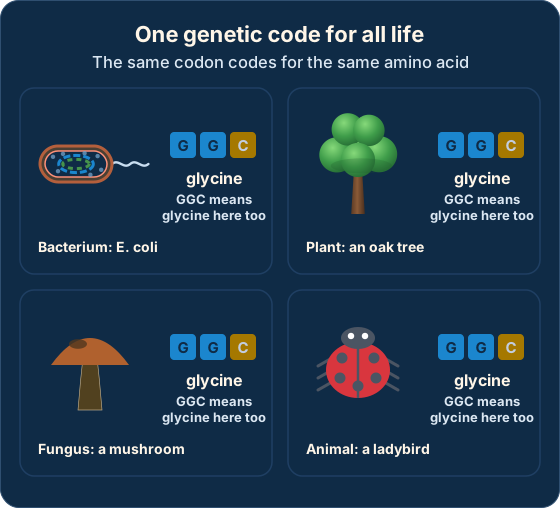
- Almost every organism uses the same code: GGC means glycine in a bacterium, an oak tree and you.
- There are only a few small variations, so the code is called near-universal.
- A shared code is evidence that all living things are descended from one common ancestor.
- The code was inherited from that ancestor; the same arbitrary code arising again and again by chance is very unlikely.
Remember it as: One code, one family tree.
Real example: bacteria that make human insulin: Since 1978, the human gene for insulin has been put into bacteria. The bacteria read the human gene with the same code and make human insulin, which is used to treat diabetes.
Free preview
This is the free notes preview
You're reading the free notes. Aimnova Pro unlocks the full study experience — and you can try it with your first topic free to keep:
- FlashcardsLock in vocabulary and key terms with spaced repetition.
- Practice questionsAnswer exam-style questions and get instant AI marking.
- Mock exams & past-paper vaultSit full mocks and see exactly how examiners award marks.
- Personalised study planA daily plan built around your exam date and weak areas.
Start Studying Free Full access to Aimnova Pro · cancel anytime
How it is asked: A Paper 1A item on what counts as evidence of a common ancestor, or a short Explain.
IB-style questionExplain[2 marks]
Explain how the genetic code provides evidence that all living organisms share a common ancestor.
Model answer plan
See the answer broken into clear points, with guidance on how each point earns marks.