The big idea: Water is an excellent solvent. Because it is polar, it dissolves a huge range of solutes to make a solution, and the chemistry of life runs in that solution.
The points to remember
- A solvent dissolves a solute to make a solution. In every living thing the solvent is water.
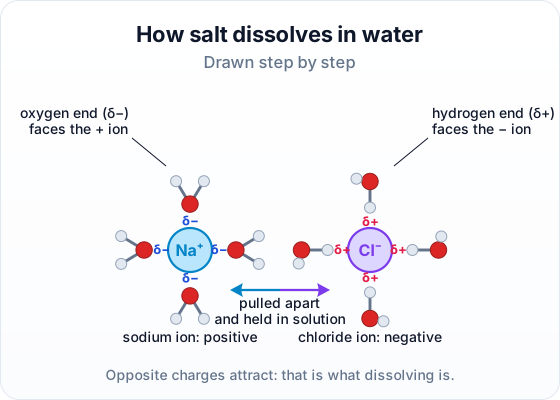
- Water is polar: a δ− oxygen and δ+ hydrogens. Its charged ends are attracted to charged or polar particles.
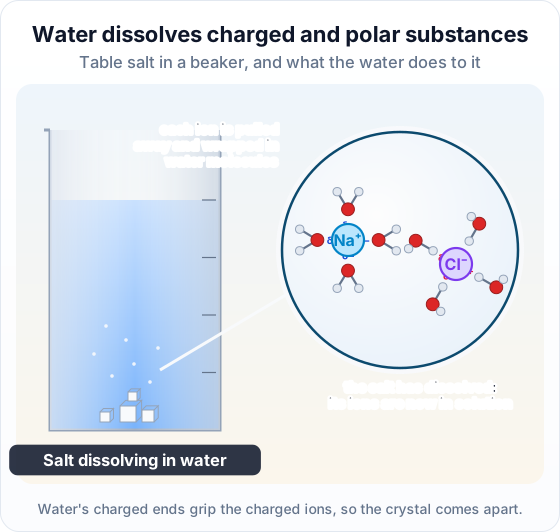
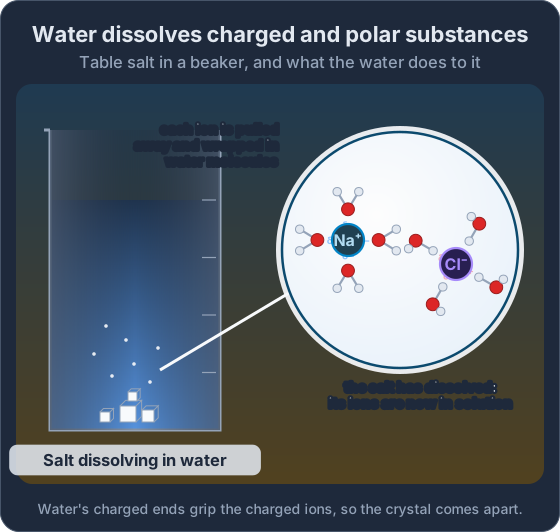
- Water molecules surround each particle, pull it away from its neighbours and hold it: the substance has dissolved.
- Hydrophilic substances (polar or charged) dissolve: glucose, amino acids, salts and mineral ions.
- A polar molecule such as glucose dissolves because its OH groups form hydrogen bonds with water.
Remember it as: Charged water dissolves charged things.
The root of it all: water is polar, with a δ− oxygen and δ+ hydrogens, so its ends grip the charged parts of other substances.
Interactive diagram
Explore the labelled diagram, charts and maps for this topic in full study mode.
Drop a pinch of salt into water and watch what the water molecules do:
Draw it yourself, one molecule at a time:
Real example: sea water: Every litre of sea water holds about 35 g of dissolved salt: sodium and chloride ions, each one wrapped in water molecules. That is why the sea is clear, not cloudy with salt grains.
Free preview
This is the free notes preview
You're reading the free notes. Aimnova Pro unlocks the full study experience — and you can try it with your first topic free to keep:
- FlashcardsLock in vocabulary and key terms with spaced repetition.
- Practice questionsAnswer exam-style questions and get instant AI marking.
- Mock exams & past-paper vaultSit full mocks and see exactly how examiners award marks.
- Personalised study planA daily plan built around your exam date and weak areas.
A sports drink is sugar and salts already dissolved in water. Drink it and within minutes they are in your blood and on their way to your muscles.
That is the point of water being a solvent: dissolved substances can be moved and can react. metabolism and transport both depend on it.
The points to remember
- Metabolism: most enzymes work in aqueous solution. The enzyme and the substance it acts on must be dissolved to move and meet.
- Transport in animals: blood plasma carries dissolved glucose, amino acids, ions, urea and hormones.
- Transport in plants: xylem sap carries water and dissolved mineral ions up; phloem sap carries dissolved sugar.
- Plants take up minerals only in solution: ions dissolved in the soil water enter the roots.
- Dissolve first. Nothing is carried, and nothing reacts, until it is in solution.
Remember it as: Dissolve first, then move, then react.
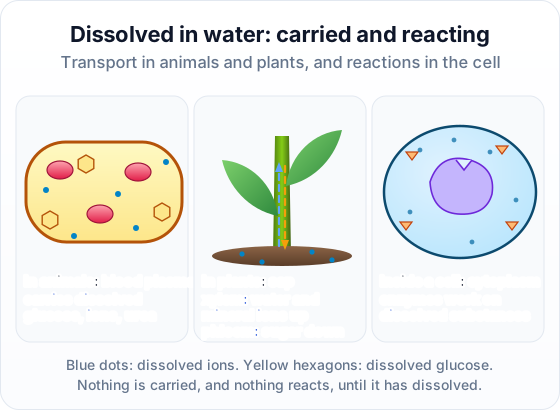
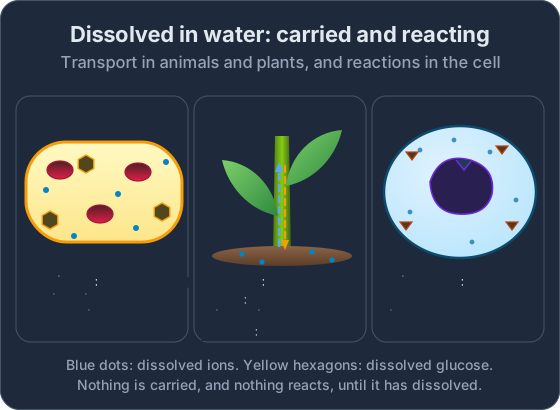
In animals: blood plasma
- About 92 % water
- Carries dissolved glucose and amino acids to cells
- Carries ions, hormones and the waste urea
In plants: sap
- Xylem sap: water and dissolved mineral ions, roots to leaves
- Phloem sap: dissolved sugar, leaves to the rest of the plant
- Minerals enter the root only in solution
Real example: a glucose drip: A hospital drip is glucose dissolved in water, run straight into a vein. Because it is in solution the plasma carries it to every cell, and the cell's enzymes can act on it at once.
The same rule links the soil to the animals that graze on it:
Minerals travel in solution, all the way up a food chain: A plant takes up copper, or nitrate, only as ions dissolved in the soil water. An animal then gets the mineral by eating the plant.
So if the soil water holds little copper, the grass takes up little, and the cattle that graze it become copper-deficient.
Feeling unprepared for exams?
Get a clear study plan, practice with real questions, and know exactly where you stand before exam day. No more guessing.
The big idea: Not everything dissolves, and that is useful. Some molecules do their job in a cell because they are hydrophobic, while hydrophilic ones dissolve and travel.
The points to remember
- Hydrophobic means non-polar: no charged parts for water to grip, so it does not dissolve. Fats, oils and waxes.
- An oil molecule is a chain of carbon and hydrogen. It cannot hydrogen-bond with water, so oil molecules stay together, apart from the water.
- Fat stores stay as droplets: insoluble, so they do not dissolve away and do not upset the cell's water balance.
- A waxy cuticle on a leaf is hydrophobic: water cannot pass through it, so the leaf does not dry out.
- Phospholipids have hydrophobic tails that turn away from water: that is what makes a cell membrane a barrier.
Remember it as: No charges, no grip, no dissolving.
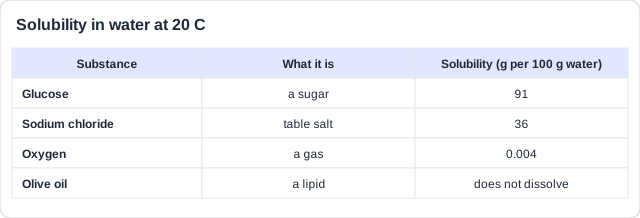
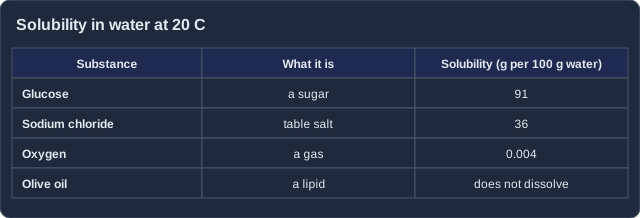
Measured at 20 C, this is how much of each substance 100 g of water can dissolve:
Real example: the lotus leaf: Rain on a lotus leaf beads up and rolls straight off, carrying dust with it. The leaf's surface is a hydrophobic wax: water cannot wet it, so the leaf stays clean and does not become waterlogged.
When you explain why a lipid does not dissolve, give the reason, not the result:
Why oil does not dissolve: Do not write 'oil is lighter' or 'oil floats' as the reason. Floating is the result. The reason is that oil is non-polar: it cannot form hydrogen bonds with water, so water leaves it alone and the oil molecules stay together.
How this is tested: Paper 1A: one mark for naming the substance that will not dissolve, or the property of water that lets blood carry nutrients (its solvent property).
Paper 2 likes a four-mark explain: why a sugar dissolves and an oil does not. Two points on the sugar, two on the oil.
A salad dressing is made by shaking vinegar (mostly water), a spoon of glucose syrup and olive oil. The glucose disappears into the vinegar, but within minutes the oil has separated into a layer of its own. Explain why glucose dissolves in water while the oil does not.
Model answer plan
See the mark-by-mark plan — for / against / judgement, with marking guidance — in study mode.