What 'Technologie' covers: Technology (die Technologie / die Technik) is part of the theme Human ingenuity. Learn the words below as a deck, then use them in the reading and writing sections.
You need words to talk about
- devices, the internet and social media
- apps and artificial intelligence
- how technology shapes work and daily life
- your opinion about them
- die Technologie / die Technik
- technology
- das Gerät
- device / gadget
- der Bildschirm
- screen
- die App / die Anwendung
- app / application
- die sozialen Medien
- social media
- im Internet surfen
- to browse the internet
- die künstliche Intelligenz (KI)
- artificial intelligence (AI)
- der Roboter
- robot
- programmieren / das Programmieren
- to code / coding
- das Werkzeug
- tool
- online / vernetzt sein
- to be connected / online
- von der Technik abhängig sein
- to depend on technology
- selbst entscheiden
- to decide for yourself
| Useful expression (German) | English |
|---|---|
| Ich verbringe zu viel Zeit vor dem Bildschirm. | I spend too much time in front of the screen. |
| Ich kann nicht ohne mein Handy leben. | I can't live without my phone. |
| Ich benutze eine App, um mein Lernen zu organisieren. | I use an app to organise my studying. |
| Die künstliche Intelligenz ist überall. | Artificial intelligence is everywhere. |
| Man muss die Technik mit Köpfchen nutzen. | You have to use technology sensibly. |
Why this matters: This vocabulary turns up in every skill — a reading text about social media, a listening interview about a phone ban, a Paper 1 blog about apps, or your oral. Reusing the right topic words is how you score Criterion A (Language).
Free preview
Reading it is one thing — hearing it is another
You're reading the free notes. Aimnova Pro unlocks the full study experience — and you can try it with your first topic free to keep:
- Audio on every wordTap any vocabulary word or example to hear it read aloud in natural German.
- FlashcardsLock in vocabulary and key terms with spaced repetition.
- Practice questionsAnswer exam-style questions and get instant AI marking.
- Mock exams & past-paper vaultSit full mocks and see exactly how examiners award marks.
- Personalised study planA daily plan built around your exam date and weak areas.
Have something to say: Examiners reward developed ideas, not just vocabulary. Take a position and back it up.
The common debates around technology
- too much screen time vs staying connected
- whether social media helps or harms
- whether robots and AI will destroy jobs or create them
Opinion phrases (use these to introduce a view)
- Meiner Meinung nach… / Aus meiner Sicht… — In my opinion… / From my point of view…
- Mir scheint, dass… / Ich glaube, dass… — It seems to me that… / I think that…
- Das Wichtigste ist… — The most important thing is…
- Einerseits… andererseits… — On the one hand… on the other hand…
- Ich bin (völlig) einverstanden mit… — I (completely) agree with…
Risiken der Technik (drawbacks)
- Wir verbringen zu viel Zeit, an die Bildschirme gefesselt.
- Die sozialen Medien können unser Selbstwertgefühl beeinflussen.
- Manche fürchten, dass ihnen die Roboter die Arbeit wegnehmen.
Vorteile (benefits)
- Die Technik verbindet uns mit der ganzen Welt.
- Apps helfen uns beim Lernen und beim Organisieren.
- Die künstliche Intelligenz schafft auch neue Arbeitsplätze.
Phones and school
- strengere Handyregeln an der Schule
- zwei Wochen Digital Detox
- in der Pause lesen statt aufs Handy schauen
AI and the future
- KI im Unterricht: Chancen und Risiken
- smarte Brillen in der Prüfung
- die Zukunft des Einkaufens
Tech in everyday life
- mit Drohnen einen Schulfilm drehen
- ein virtueller Museumsbesuch
- Sprachassistenten und E-Scooter in der Stadt
Big questions behind this topic (IB guide, theme Human ingenuity)
- Wie beeinflussen Entwicklungen in Wissenschaft und Technik unser Leben?
- Macht uns die Technik freier oder abhängiger?
- Was darf künstliche Intelligenz in der Schule?
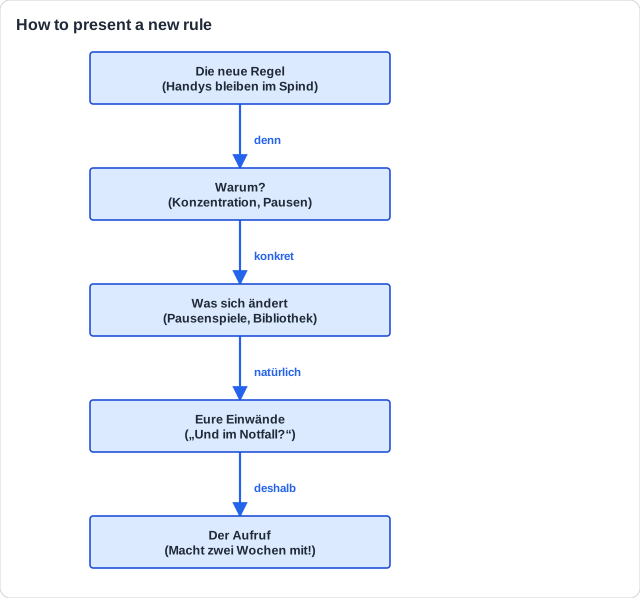
Link your ideas: Connectors lift your answer from a list into an argument: außerdem (besides), jedoch / aber (however), deshalb (therefore), obwohl (although). Use at least two or three in any written answer.
Learn what examiners really want
See exactly what to write to score full marks. Our AI shows you model answers and the key phrases examiners look for.
Read like Paper 2: Here is a short blog — the kind of text Paper 2 (Reading) gives you. Then we'll do one exam question together.
How to read it
- Read it once just for the general idea; don't worry about every word.
- Tap the audio button to hear it.
- Tap Übersetzung anzeigen if you get stuck.
Ein Tag im Museum der künstlichen Intelligenz (1 von 3): Letzten Monat besuchte ich eine Ausstellung über künstliche Intelligenz in einem Wissenschaftsmuseum. Bevor ich hineinging, war ich überzeugt, dass uns die Roboter bald alle Arbeitsplätze wegnehmen würden.
Dort lernte ich jedoch etwas, das ich nicht erwartet hatte.
Ein Tag im Museum der künstlichen Intelligenz (2 von 3)
Eine Führerin erklärte uns, dass die Technik zwar einige Jobs vernichtet, aber zugleich neue schafft, die wir uns heute noch nicht vorstellen können. Ich sah Maschinen, die Bilder malten, und Roboter, die den Ärzten halfen.
Ein Tag im Museum der künstlichen Intelligenz (3 von 3)
Am Ende ging ich mit dem Gedanken hinaus, dass die Zukunft keine Angst macht, wenn wir lernen, diese Werkzeuge zu nutzen. Deshalb möchte ich jetzt Programmieren studieren.
- die Ausstellung
- exhibition
- überzeugt sein (von)
- to be convinced (that)
- der Arbeitsplatz / der Job
- job / position
- das Werkzeug
- tool
- Angst machen
- to be scary / to frighten
IB-style task — eine Frage aus Paper 2
Eine Frage, Schritt für Schritt
- The question — „Was möchte die Person dem Text zufolge jetzt studieren?“
- Find it in the text. Look for the last line: „Deshalb möchte ich jetzt Programmieren studieren.“
- The answer — Sie möchte Programmieren studieren.
Reading technique: For a „dem Text zufolge“ (according to the text) question, find the exact line that proves your answer — don't rely on memory or general knowledge.
Die Aufgabe — your task: Die Schülerzeitung hat eine Meinungsseite zum Thema Technik und Zukunft. Schreibe eine Kolumne zur Frage: Sollte unsere Schule Handys im Unterricht erlauben?
| Teil | Auf Deutsch | English |
|---|---|---|
| Inhalt 1 | Nimm klar Stellung und begründe deine Meinung. | Take a clear position and give reasons. |
| Inhalt 2 | Antworte auf die Gegenseite. | Answer the other side. |
| Länge | Schreibe zwischen 450 und 600 Wörtern. | Write 450–600 words. |
Opinion column structure — 5 steps
Punchy title
A short title that already shows your view. „Das Handy gehört in die Schultasche, nicht auf den Tisch“
Your position
Say where you stand in the first lines. „Ich bin entschieden dagegen.“
Arguments
Two arguments, each with a reason or example. „Erstens lenkt jede Nachricht ab… Zweitens…“
Answer the other side
Name the opposite view, then answer it. „Natürlich sagen manche, … Das stimmt – aber …“
Conclusion
Finish firmly with your position. „Deshalb: Handys ja, aber nur, wenn…“
Title → Position → Arguments → Rebuttal → Conclusion
Modell: die 5 Schritte in ~90 Wörtern
Die fertige Kolumne, Schritt für Schritt
- Das Handy gehört in die Schultasche, nicht auf den Tisch
- Viele fordern, dass wir Handys im Unterricht frei benutzen dürfen. Ich bin entschieden dagegen.
- Erstens lenkt jede Nachricht ab: Wer ständig aufs Display schaut, verliert den Faden. Zweitens sprechen wir in der Pause kaum noch miteinander, weil alle am Bildschirm hängen.
- Natürlich sagen manche, das Handy sei ein nützliches Lernwerkzeug. Das stimmt – aber dafür hat die Schule Tablets, die die Lehrkräfte gezielt einsetzen können.
- Die Technik ist ein Werkzeug, kein Ersatz für Konzentration. Deshalb: Handys ja, aber nur, wenn der Unterricht sie wirklich braucht.
Warum es funktioniert — what makes it strong: A strong opinion column does these things for each of the three Paper 1 criteria:
A — Language /12
- Konjunktiv I for a reported view: „das Handy sei“
- Connectors: „erstens“, „zweitens“, „weil“, „deshalb“
- Tech vocabulary: „ablenken“, „das Werkzeug“, „der Bildschirm“
B — Message /12
- Task fully done: a clear position, two arguments AND a reply to the other side
- Each argument has a reason or example
C — Conceptual /6
- Column conventions: a punchy title and the position in the first lines
- Answers the other side: „Natürlich sagen manche … Das stimmt – aber …“
- A personal, persuasive voice and a firm conclusion
Never wonder what to study next
Get a personalized daily plan based on your exam date, progress, and weak areas. We'll tell you exactly what to review each day.
Höre wie in Paper 2: Paper 2 also tests listening (25 marks): you hear short clips and answer questions — but you never see the words. Here's one, simplified. Play it, answer, then reveal the transcript to check.
Hörverstehen — Lukas und der Sprachassistent
Listen to Lukas talk about the voice assistant his family uses at home. Try to answer before you reveal the transcript — that's how Paper 2 Listening works.
Du hörst Lukas über den Sprachassistenten sprechen, den seine Familie zu Hause benutzt.
- Wobei hilft der Sprachassistent Lukas? (How does the voice assistant help Lukas?)
- Was macht Lukas Sorgen, und was macht die Familie deshalb? (What worries Lukas, and what does the family do about it?)
Hallo, ich bin Lukas. Seit einem Jahr haben wir zu Hause einen Sprachassistenten. Meine Eltern fragen ihn nach dem Wetter, und meine kleine Schwester lässt sich von ihm Musik vorspielen. Ich finde ihn praktisch, weil er mich an meine Termine erinnert und beim Kochen die Rezepte vorliest. Jedoch macht mir eine Sache Sorgen: Das Gerät hört immer zu, und ich weiß nicht genau, was mit unseren Daten passiert. Deshalb schalten wir das Mikrofon jetzt aus, wenn wir es nicht brauchen. Für mich ist das Wichtigste, die Technik zu nutzen, ohne ihr blind zu vertrauen.
Hi, I'm Lukas. For a year we've had a voice assistant at home. My parents ask it about the weather, and my little sister gets it to play music for her. I find it practical because it reminds me of my appointments and reads out the recipes when I'm cooking. However, one thing worries me: the device is always listening, and I don't know exactly what happens to our data. That's why we now switch the microphone off when we don't need it. For me, the most important thing is to use technology without trusting it blindly.
- Er erinnert ihn an seine Termine und liest beim Kochen die Rezepte vor.
- Das Gerät hört immer zu und er weiß nicht, was mit den Daten passiert; deshalb schalten sie das Mikrofon aus, wenn sie es nicht brauchen.
Listening technique: Read the question first, then listen for that one detail — you don't need to catch every word. In the real exam you hear each clip twice.