Carbon and water footprints at Higher Level: The same two footprints as SL. At HL, link them to trade (hidden water and carbon) and to choosing between strategies.
Practise this as you read
- Explain when a carbon or water footprint shows unsustainability.
- Justify the best change from a chart.
Free preview
This is the free notes preview
You're reading the free notes. Aimnova Pro unlocks the full study experience — and you can try it with your first topic free to keep:
- FlashcardsLock in vocabulary and key terms with spaced repetition.
- Practice questionsAnswer exam-style questions and get instant AI marking.
- Mock exams & past-paper vaultSit full mocks and see exactly how examiners award marks.
- Personalised study planA daily plan built around your exam date and weak areas.
Counting greenhouse gases: A carbon footprint adds up all the greenhouse gases something produces, as tonnes of carbon dioxide equivalent.
The points to remember
- A carbon footprint measures the greenhouse gases produced.
- It is measured in tonnes of carbon dioxide equivalent (CO2e).
- It can be worked out for a person, product, company, city or country.
- It is unsustainable when more is emitted than plants and oceans can absorb.
- Cut it with renewable electricity, electric vehicles, less packaging and less fertiliser.
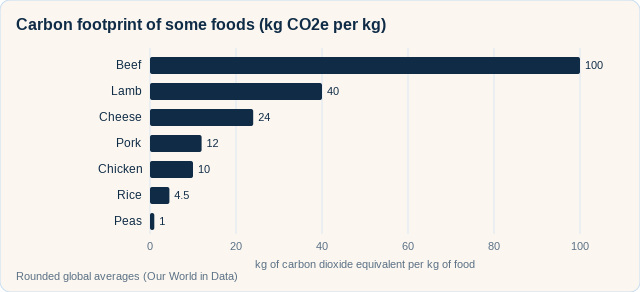
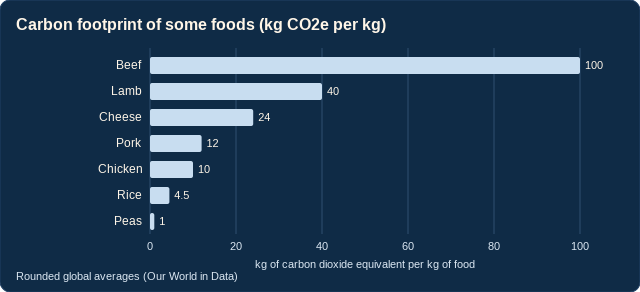
An everyday example: one long-haul return flight can add more to a person's carbon footprint than a year of driving to school.
Remember it as: Carbon footprint: gases out, in tonnes of CO2e.
Practice with exam-style questions
Answer exam-style questions and get AI feedback that shows you exactly what examiners want to see in a full-marks response.
Counting water, even the water you cannot see: A water footprint adds up all the fresh water used, including the embedded water in food and goods.
The points to remember
- A water footprint measures the volume of fresh water used.
- It is measured in cubic metres per year (or litres per product).
- It includes embedded (hidden) water: the water used to grow or make things.
- It is unsustainable when more is used than rain and rivers put back each year.
- Cut it with drip irrigation, grey water and drought-resistant crops.
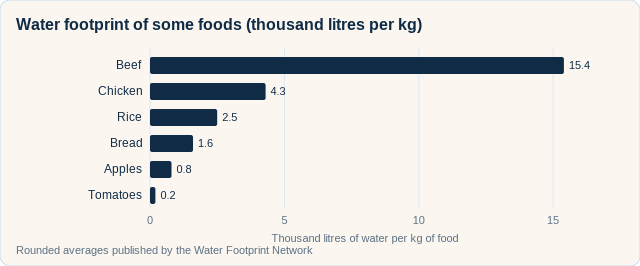
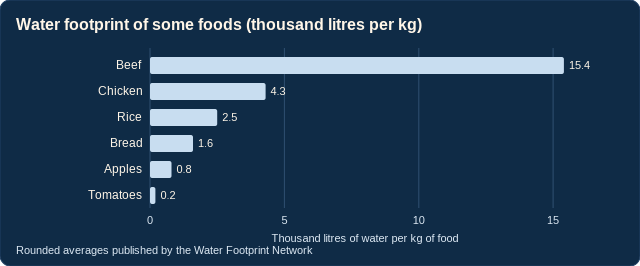
Hidden trade: when a dry country imports wheat, it also imports the water used to grow it, easing pressure on its own rivers.
Remember it as: Water footprint: water in, in cubic metres a year.
Footprints as sustainability measures: Each footprint compares what people use with what nature can supply or absorb.
The points to remember
- Different footprints show different pressures: land (ecological), air (carbon), fresh water (water).
- Each is unsustainable when use is greater than what nature can supply or absorb.
- Footprints work at any scale: a product, a person, a company, a country, the world.
- They change over time, so they are tracked year by year.
- To pick the best change, find the biggest cut in the impact that matters most in that place.
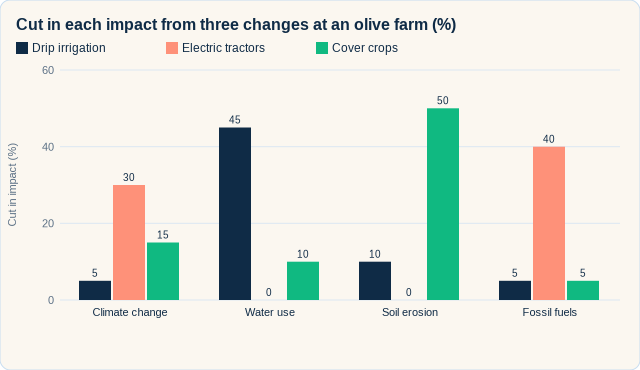
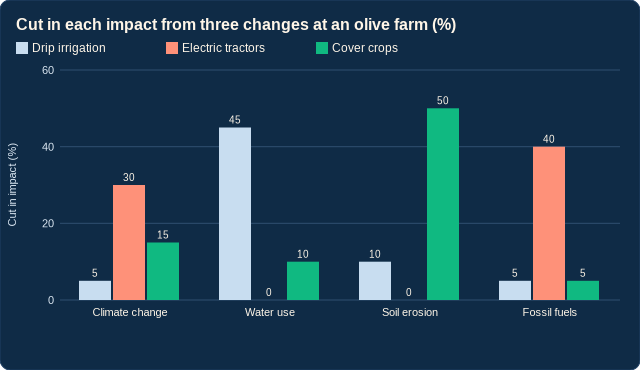
Reading it: on a dry hillside where soil washes away, cover crops (a 50% cut in erosion) may matter most; where water is scarce, drip irrigation (45%) wins.
Ways that do not score: Carbon capture, a law to stop production, or just 'cleaner energy' do not score. Name the method: 'switch the tractors to electric'. You will not be asked to calculate a footprint.
Feeling unprepared for exams?
Get a clear study plan, practice with real questions, and know exactly where you stand before exam day. No more guessing.
How this comes up: Paper 1: a table gives a product's carbon and water footprints. State impacts [2], then suggest a cut for each [2]. The Riverside factory is the example.
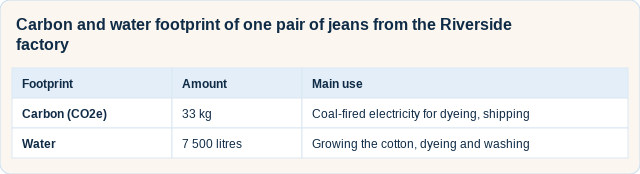
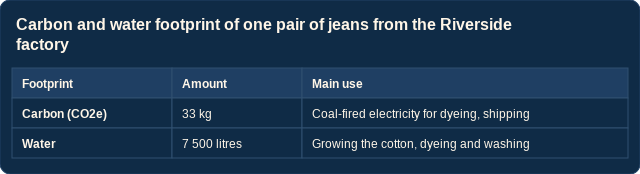
Figure 1 shows the carbon and water footprint of one pair of jeans from the Riverside factory, with the main use of each.
(a) Using Figure 1, state two environmental impacts of producing one pair of jeans from the Riverside factory.
(b) Suggest one method by which the carbon footprint and one method by which the water footprint could be lowered.
Model answer plan
See the answer broken into clear points, with guidance on how each point earns marks.