The big idea: Eating before a race is not about feeling full. It has to do two jobs at once.
The two jobs
- Top up the fuel in your muscles.
- Leave your stomach empty enough to run on.
Both, not one: Get one right and the other wrong and the race goes badly.
Our example: Dilan has a 10 km road race at 10 a.m. on Saturday.
Everything in this micro is one decision she makes about food, and what that decision does to her.
You already know what the three macronutrients are — carbohydrates, proteins and lipids — and that most of Dilan's stored carbohydrate sits in her muscles and liver as glycogen, which is carbohydrate packed away ready to use. None of that changes here. What changes is the timing.
One word to get straight: Gastrointestinal just means the stomach and the gut.
So when the guide says gastrointestinal comfort, it is asking a simple question: does your stomach feel fine, or are you bent double with cramp at 6 km?
Free preview
This is the free notes preview
You're reading the free notes. Aimnova Pro unlocks the full study experience — and you can try it with your first topic free to keep:
- FlashcardsLock in vocabulary and key terms with spaced repetition.
- Practice questionsAnswer exam-style questions and get instant AI marking.
- Mock exams & past-paper vaultSit full mocks and see exactly how examiners award marks.
- Personalised study planA daily plan built around your exam date and weak areas.
Dilan's race starts at 10. She does not eat at 9:45 and hope for the best. She works backwards from the gun, and the closer the start comes, the smaller and simpler the food gets.
Her whole plan, from the night before to the finish line. Watch the food shrink as the start line gets closer.
Interactive diagram
Explore the labelled diagram, charts and maps for this topic in full study mode.
| How long before the start | What goes in | What that looks like for Dilan |
|---|---|---|
| The day before | Normal meals, carbohydrate at every one | Rice, bread, pasta — nothing she has not eaten before |
| 3–4 hours | A proper meal, low in fat and low in fibre | Porridge with honey and a glass of juice |
| About 1 hour | A small carbohydrate snack, roughly 25 g | A banana |
| Last 20 minutes | Nothing solid | Sips of water only |
Why the gap matters: A meal needs blood in the gut to be digested. The second Dilan starts running, that blood is sent to her legs instead.
So anything still in her stomach at 10 a.m. is going to stay there.
Feeling unprepared for exams?
Get a clear study plan, practice with real questions, and know exactly where you stand before exam day. No more guessing.
Now run the same morning badly. At 9 a.m. Dilan eats a big fried breakfast — eggs, sausage, buttered toast. An hour later she is on the start line feeling pleased with herself.
What happens, step by step
The meal is still there
Fat and fibre slow the stomach down. An hour later, most of that breakfast has not gone anywhere.
The blood leaves the gut
The moment she starts running, blood is sent away from the stomach and gut to the working muscles. Digestion almost stops.
So it sits there, and it hurts
Cramp, a stitch, feeling sick, and at worst a sprint for a toilet at 6 km. That is poor gastrointestinal comfort, and it is the most common way a fuelling plan fails.
Her time is ruined anyway
Notice she is not short of fuel. She has plenty. She simply cannot run properly while she feels like that — which is why comfort counts as much as fuel.
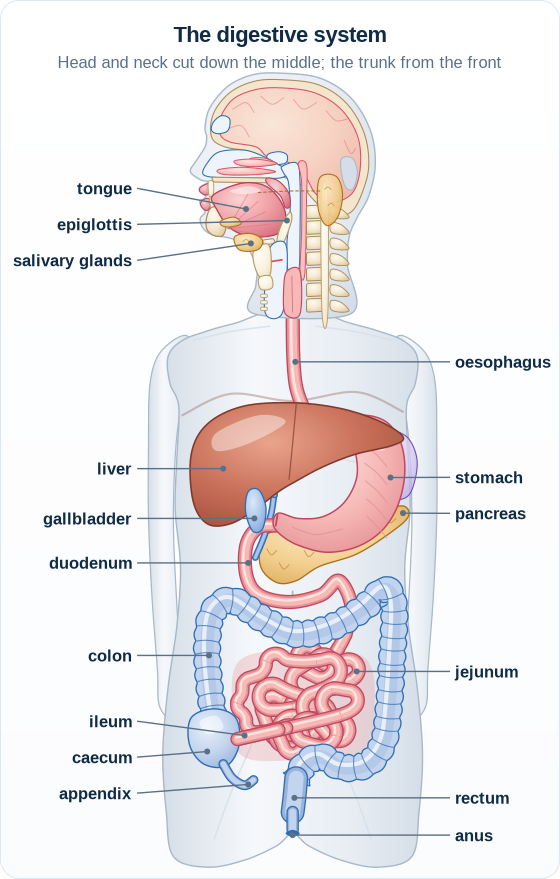
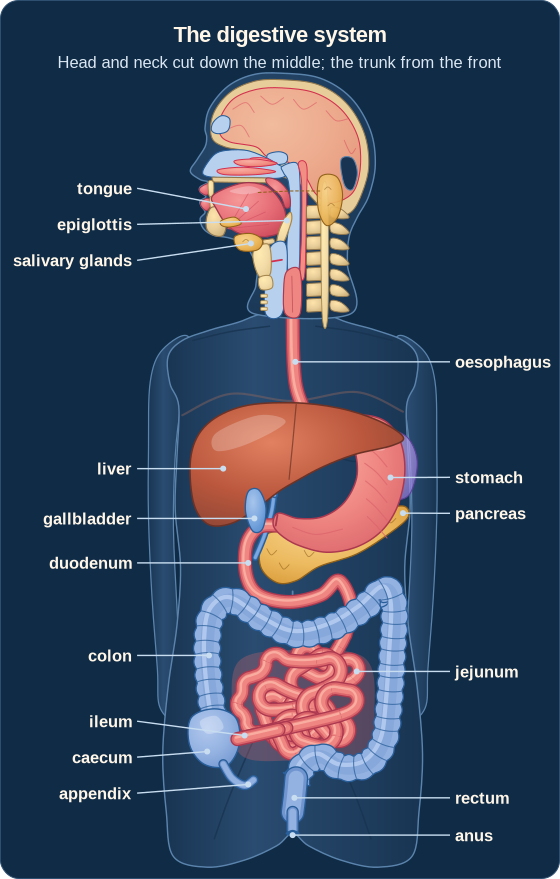
The three things that sit heaviest: Fat, fibre and sheer size are what keep food in the stomach longest.
That is the real reason the pre-event meal is carbohydrate-based and low in fat — not because carbohydrate is magic, but because it leaves the stomach fastest.
Does Dilan need to eat during her 10 km? No. She is out there for about 45 minutes, and her stored glycogen covers that easily.
What decides it is how long the event lasts — not how hard it feels.
Under an hour
- Stored glycogen covers the whole thing
- Nothing needs to go in during it
- Dilan's 10 km sits here
One to two and a half hours
- Stores start running low near the end
- Roughly 30–60 g of carbohydrate an hour
- A sports drink, a gel or a few chews
Longer than that
- Stores will not last, so fuel from early on
- More per hour, taken in small regular amounts
- Her marathon in March sits here
Two ways to ruin it: Too much at once. A whole gel swallowed dry at 20 km upsets the gut for the same reason a heavy meal does.
Something new on the day. Whatever she plans to use, she uses it in training first, so her gut is used to it.
What about protein and lipids?: Not during the event. Both are slow to digest, and slow digestion is exactly the problem being avoided.
During exercise, carbohydrate is the one that gets in fast enough to be worth taking.
Memorize terms 3x faster
Smart flashcards show you cards right before you forget them. Perfect for definitions and key concepts.
The guide asks you to adjust a plan — for the activity, and for the person doing it. The thinking is the same every time; only the numbers move.
A long endurance event
- Hours long, so fuel has to go in during it
- Running shakes the gut about, so drinks and gels are easier to take than solid food
- Every item has been practised in training first
A stop-start team game
- Around 90 minutes of bursts, so stores mostly cover it
- The breaks are fixed, so half time is the feed — not whenever she fancies it
- A carbohydrate drink beats anything solid in a ten-minute break
Adjusting for the person
Sex differences
Advice like 60 g an hour is an average, and much of the research behind it was done on men. Amounts work better set per kilogram of body mass, so a smaller athlete takes less. Gut comfort also varies from person to person, which is why each athlete tests their own plan.
Age
A 13-year-old has a smaller stomach and is still growing, so smaller, more frequent feeds work better than one big meal. Older adults often digest more slowly and feel less hungry, so food has to be planned rather than waited for.
Activity level
Dilan trains six days a week, so she refuels after every session. Someone who jogs once a week needs no gels at all — ordinary meals cover everything they do.
Two questions set the whole plan: How long will this last? That decides whether anything goes in during it.
How big is the person doing it? That decides how much. Everything else follows from those two.
How this is tested — you take a real event and say what someone should eat, when they should eat it, and why.
The reason is tied either to gastrointestinal comfort or to fuel running out. It comes up two ways:
Paper 1 — recall and data
- Multiple choice on timing, or on what to avoid
- A table of what an athlete ate against how they felt
- One mark, so the reason has to be the exact one
Paper 2 — explain and evaluate
- Outline a pre-event meal for a named activity
- Explain why a meal caused stomach discomfort
- Evaluate a fuelling plan someone has written
- Marks for linking the food to the timing to the effect
The trap: naming the food and stopping there: She should eat pasta scores nothing on its own. The marks live in the when and the why — carbohydrate three hours before, low in fat so it has left the stomach in time. Food, timing, reason.
A hockey player eats a large, creamy pasta dish 45 minutes before a match and feels sick during the first half. Explain why. [3]
Model answer plan
See the answer broken into clear points, with guidance on how each point earns marks.
Where marks are lost: She ate too much is one idea, not three. The command word is explain, so every mark needs its own reason — the timing, the fat, and the blood leaving the gut.
Exam tips
- Strategies must be about the food itself: practise the amount, practise the timing, choose foods that digest easily.
- Food hygiene or how the food is cooked does not answer a question on stomach comfort.
- Amount and timing count as two different strategies; give two when two are asked.
- Say why each one works: less fat, fibre and bulk leaves the stomach sooner.