What 'the environment' covers: The environment is part of the theme Sharing the planet. You need vocabulary to talk about pollution, climate change, recycling and protecting nature.
How to use this list
- Give your opinion about them.
- These are common English B words. Treat the list as a glossary.
- Learn each term with its meaning and a synonym.
- Reuse the terms in the reading and writing sections.
- the environment
- the natural world — the air, water, land and living things around us
- climate change
- the long-term shift in weather patterns, mainly caused by human activity
- global warming
- the gradual rise in the Earth's average temperature
- pollution — to pollute
- harmful substances in the air, water or land — to add them
- waste / rubbish
- the things we throw away because we no longer want them
- to recycle
- to treat used materials so they can be made into something new
- single-use plastic
- plastic that is used once and then thrown away (e.g. a bottle)
- to save (water / energy)
- to use less of something, on purpose, so none is wasted
- to protect nature
- to keep the natural world safe from harm
- renewable energy
- energy from sources that never run out, such as the sun and wind
- sustainable — sustainability
- able to continue without harming the planet — the quality of being so
- responsible consumption
- buying and using only what you need, in a way that is kinder to the planet
- to throw away
- to get rid of something you no longer want
| Useful expression | What it means |
|---|---|
| We must look after the environment. | We have a duty to care for the natural world. |
| I recycle plastic and paper at home. | I sort and reuse these materials instead of binning them. |
| We need to reduce pollution. | We should make less harmful waste go into the air and water. |
| I try to save water and energy. | I make an effort to use less of both. |
| Climate change is a global problem. | It affects the whole world, not just one country. |
Why this matters: This vocabulary turns up in every skill — a reading text on recycling, a listening interview about a green project, a Paper 1 blog about a school campaign, or your oral. Reusing precise topic words is how you score Criterion A (Language).
Free preview
Reading it is one thing — hearing it is another
You're reading the free notes. Aimnova Pro unlocks the full study experience — and you can try it with your first topic free to keep:
- Audio on every wordTap any vocabulary word or example to hear it read aloud in natural English.
- FlashcardsLock in vocabulary and key terms with spaced repetition.
- Practice questionsAnswer exam-style questions and get instant AI marking.
- Mock exams & past-paper vaultSit full mocks and see exactly how examiners award marks.
- Personalised study planA daily plan built around your exam date and weak areas.
Have something to say: Examiners reward developed ideas, not just vocabulary. Take a position and back it up.
Common debates on the environment
- Individual action vs the responsibility of governments and companies
- Whether small changes really help
- The cost of living sustainably
Opinion phrases (use these to introduce a view)
- In my opinion… / From my point of view… — to introduce what you think
- It seems to me that… / I believe that… — a slightly softer way to give a view
- The most important thing is… — to highlight your main point
- On the one hand… on the other hand… — to weigh up two sides
- I (completely) agree that… / I'm not convinced that… — to react to an idea
The problem (drawbacks)
- We generate too much rubbish and single-use plastic.
- Pollution harms our health and damages nature.
- Many people think one person alone can't change anything.
The solutions (what helps)
- Recycling and reducing what we buy is within everyone's reach.
- Renewable energy is cleaner and more sustainable.
- Small habits, added together, really do make a difference.
Waste
- Food waste in shops, restaurants, the school canteen
- Plastic bans and plastic habits abroad
- Old phones, e-waste and "green" products that are not
Nature under pressure
- Too many visitors on a beach or in a park
- Building on a national park
- Forests, rivers, floods, wildlife
Taking action
- A clean-up day: why join, what happens
- Saving energy and water at school
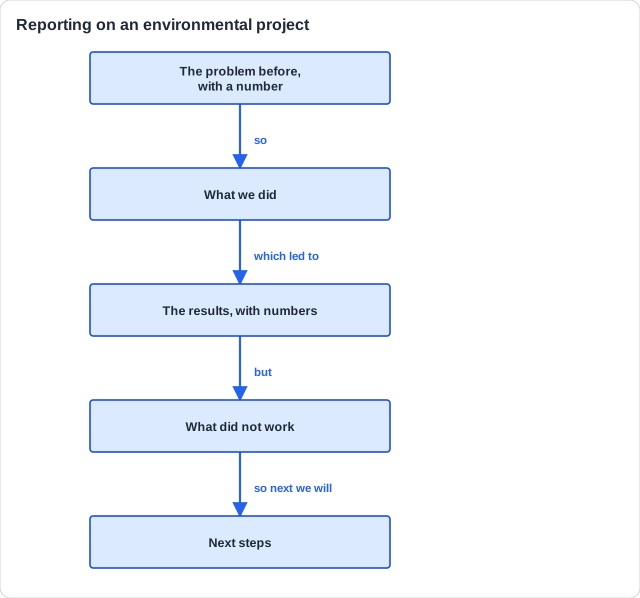
- Reporting what a project achieved
- carbon emissions
- the carbon dioxide released by cars, factories and heating
- greenwashing
- making a product seem better for the environment than it really is
- e-waste
- old phones, computers and other electronic devices that are thrown away
- renewable energy
- energy from sources that do not run out, such as wind and sun
- a habitat
- the natural home of an animal or plant
- to raise awareness
- to make more people know about a problem
Link your ideas: Connectors lift your answer from a list into an argument: moreover (to add), however (to contrast), therefore (to conclude), although (to concede). Use at least two or three in any written answer.
Feeling unprepared for exams?
Get a clear study plan, practice with real questions, and know exactly where you stand before exam day. No more guessing.
Read like Paper 2: Here is a short blog post — the kind of text Paper 2 (Reading) gives you. Read it once just for the general idea; don't worry about every word. Then we'll work through one exam question together.
Our green project at school (part 1): Last year my school produced a huge amount of rubbish: nobody recycled and the corridors were full of plastic bottles.
Our green project at school (part 2)
So a group of us students set up a green project. First we placed coloured bins in every classroom and organised talks to explain how to separate waste. At first it was hard to convince people, but little by little more classmates joined in.
Our green project at school (part 3)
Now we recycle almost everything, we buy local products in the canteen, and we have planted a small vegetable garden in the playground. Looking after the environment from school is worth it: I feel proud of what we have achieved together.
- to set up / to launch
- to start something new, such as a project
- a bin
- a container you put rubbish or recycling into
- to separate waste
- to sort rubbish into types (plastic, paper, food) for recycling
- to join in
- to start taking part in an activity with others
- a vegetable garden
- a plot of land where vegetables are grown
IB-style task — one Paper 2 question
One question, step by step
- The question — "According to the text, what was the first thing the students did in the project?"
- Find it in the text. Look for the word "First": "First we placed coloured bins in every classroom and organised talks to explain how to separate waste."
- The answer — They placed coloured bins in every classroom (and organised talks). The words are right there in the text, so no outside knowledge is needed.
Reading technique: For an "according to the text" question, find the exact line that proves your answer — don't rely on memory or general knowledge.
The task: Your school is running an environmental campaign. Write a speech for the school assembly: describe how you look after the environment (or don't) and persuade students to live more sustainably.
Write 450–600 words.
Speech structure — 5 steps
Greet the audience
Speak to the people in the room. "Good morning, teachers and fellow students."
Introduce yourself and the topic
Say who you are and what you will talk about. "I'm Marta, and today I want to talk about something urgent…"
Two or three arguments
Signpost them so listeners can follow. "First, separate your waste. Second…"
Call to action
Tell the audience what to do. "Take one small step this week."
Close and thank
End with a strong line and thanks. "Together, we'll make a real difference. Thank you."
Greeting → Topic → Arguments → Call to action → Thanks
Model: the 5 steps in ~100 words
The speech, step by step
- Good morning, teachers and fellow students.
- I'm Marta, and today I want to talk about something urgent: how much rubbish we throw away every day without realising.
- I'll be honest. I used to throw plastic in the normal bin, and I left the lights on in every room. Then I learned how much waste our school produces in a single week. So here is what we can do. First, separate your waste. Second, buy local products. And finally, save water and energy at home.
- Don't try to be perfect — just start. Take one small step this week.
- Together, we'll make a real difference. Thank you.
Why it works: A strong speech does this for each of the three Paper 1 criteria:
A — Language /12
- Range of tenses: past "I used to throw", "I left", future "we'll make", imperatives
- Signposting connectors: "first", "second", "finally", "so"
- Topic vocabulary: rubbish, waste, local products
B — Message /12
- Task fully done: describes her habits AND persuades students
- Three practical actions
C — Conceptual /6
- Speech conventions: greets the audience, thanks them at the end
- Direct, persuasive address: "Don't try to be perfect"
- A call to action for the whole room
Ready to ace The environment?
You've seen the preview. Here's what you'll unlock:
Bite-Sized Study Notes
Full syllabus broken into chunks that stick
Exam Practice
See exactly how to score full marks
AI Feedback
Know exactly what examiners want
Smart Study Plan
Know exactly what to study next